Last time here, we wrote about a Virginia Woolf cocktail. This time, we write about her encounter with an inebriated T.S. Eliot at tea, as she documented in her diary on this date, Dec. 19, 100 years ago today.
How elliptical this book becomes! I dont respect events any more; I’d like to record poor Tom’s getting drunk, all the same. We went to a flat in an arcade, & asked for Captain Eliot. I noticed that his eyes were blurred. He cut the cake meticulously. He helped us to coffee–or was it tea? Then to liqueurs. He repeated, L. noticed, “Mrs Ricardo”, as L. told his story; he got things a little wrong . . . Tom then quietly left the room. L. heard sounds of sickness. After a long time, he came back, sank into the corner, & I saw him, ghastly pale, with his eyes shut, apparently in a stupor. When we left he was only just able to stand on his legs . . . Next day, I spent 10 minutes at the telephone receiving apologies–how distressing, what could we all think? Could we forgive him– the first time–would we ever come again? . . . One of those comedies which life sometimes does to perfection. – Diary 2, 278.
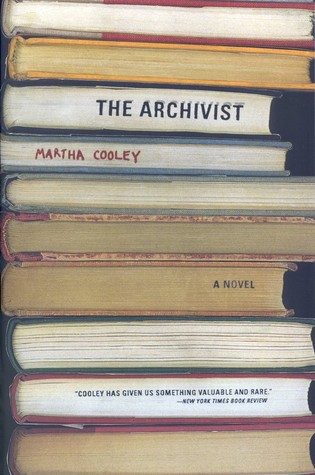
Meandering through the bounteous bookshelves of a writer friend in Seattle for whom I was recently house-sitting, I zeroed in on The Archivist, a 1998 novel by Martha Cooley.
The story revolves around a cache of letters from T.S. Eliot to Emily Hale that Hale bequeathed to a university library (unnamed in the novel) in 1965, with the stipulation that they not be opened until 2020. This is true; the letters are at Princeton, sealed until 2020. The archivist’s wife is a poet, and they share an interest in Eliot. After her death he takes the university position right around the time of the bequest and meets a graduate student who is interested in the letters.
Eliot’s work weaves in and out, as do issues of Jewishness, war atrocities, conversion, and identity. Eliot’s life with and abandonment of his first wife Vivienne comes into it but not so much their London milieu, with a few exceptions, including this:
Roberta (the student) to Matthias (the archivist):
I was just remembering how Virginia Woolf once said Eliot was sordid and intense. Did you know that when he was still married to Vivienne, he occasionally wore face powder when they went to dinner parties? Can you imagine? I guess he couldn’t resist the temptation to dramatize his suffering—God knows Vivienne wore hers on her sleeve.
English: T. S. Eliot, photographed one Sunday afternoon in 1923 by Lady Ottoline Morrell (Photo credit: Wikipedia)
Of course I had to see if that was accurate (Woolf’s description, not the face powder) and found it in Woolf’s Diary, Nov. 12, 1934, about a performance of Eliot’s uncompleted verse drama, “Sweeney Agonistes”: “The acting made more sense than the reading but I doubt that Tom has enough of a body & brain to bring off a whole play: certainly he conveys an emotion, an atmosphere: which is more than most: something peculiar to himself; sordid, emotional, intense—a kind of Crippen, in a mask: modernity & poetry locked together.”
Seems to me she’s talking more about the play and his approach to it than Eliot himself. While she does implicate Eliot’s character and craft with her curt observations, the quote, out of context, strikes me as a bit too convenient for Cooley, the Woolf citation too dishy to resist. Still, it was a fascinating novel.
Several Virginia Woolf/Modernism-related items here, all gleaned from Facebook friends who teach Woolf in the college classroom.
Elisa Kay Sparks and her students are building an iPad app called WoolfPlace that will provide maps, histories, references, pictures, links and videos for different sites in Woolf’s life and works.
Anne Fernald’s students are blogging about Woolf as part of the undergraduate Woolf elective course Fernald is teaching at Fordham University this spring. You can find their posts at 3504 Woolf. Fernald kicked off the course by playing Florence and the Machine’s “What the Water Gave Me.”
Also from Fernald is the news that Faber has launched a new “Wasteland” app that includes the full text of the poem, a variety of audio readings (including two by T.S. Eliot himself, and one by Viggo Mortensen), plus a video rendition.
Personal details of Virginia Woolf’s final years are available to the public for the first time after the University of Sussex acquired this engagement diary and seven more at a Sotheby’s auction.
The University of Sussex has purchased Virginia Woolf’s small pocket engagement diaries that she used to detail her personal life from 1930 to 1941. The last entry is for March 28, 1941, which is written in pencil by Leonard Woolf, and simply states “Died.”
The University of Sussex has purchased Virginia Woolf’s small pocket engagement diaries that she used to detail her personal life from 1930 to 1941. The last entry is for March 28, 1941, which is written in pencil by Leonard Woolf, and simply states “Died.”
The diaries briefly record Woolf’s meetings with contemporaries, including E. M. Forster and T. S. Eliot, along with visits to her artist sister Vanessa Bell. They also indicate when she would be staying at her home Monk’s House in Rodmell, East Sussex.
Some of the diaries include pencil lines through several dates and appointments, accompanied by the word “Bed,”indicating periods when she was experiencing health problems.
The University’s Special Collections has an extensive collection of materials related to Woolf. It bought the diaries to complement the Monks House Papers, which were donated to the University’s Special Collections in 1972 and contain Woolf’s correspondence from other writers, family, friends, admirers and publishers. They also include her reading notebooks, drafts of essays and typescripts of some of her works, proofed and corrected in her own hand.
The Monks House Papers fall into three groups: letters, manuscripts and press-cuttings. There is documentation of Woolfs career from her earliest journalism to what was possibly her final short fiction, The Watering Place, a two-page manuscript which draws on a diary entry of 1941 written shortly before her suicide.
Fiona Courage, special collections manager, said: “The collection very much represents Woolf’s ‘everyday’ life in the same way that the pocket engagement diaries do. As with the engagement diaries, our collections relate to Woolf as an individual rather than her public persona of novelist, reviewer and essayist.
“The activities recorded in these engagement diaries may not have found their way into her more detailed daily diaries, but are significant in terms of her daily life, her social circle and her physical and mental state. The diaries also complement a set of appointment diaries belonging to Leonard Woolf, and held within his papers at the University.”
She added that these diaries have never been made publically available for research.“By acquiring them we can now make them accessible to scholars, enthusiasts and the general public.”
The University was able to raise the £60,000 necessary to buy the diaries with support from the V&A/MLA Purchase Grant Fund*, the Friends of the National Libraries and a number of individual donors.
Besides the Monk’s House Papers and the small engagement diaries, the University of Sussex Special Collections holds the following related materials:
Leonard Woolf Papers
Charleston Papers
Birrell Papers
Nicolson Papers
A.O. Bell Papers
Quentin Bell Papers
Emery Collection
Maria Jackson Letters
Mrs Woolf and the Servants: research papers
Additional biographical and literary manuscripts of Virginia Woolf that were at Monk’s House are now in the Berg Collection of the New York Public Library in New York. The Berg Collection holds the largest collection of Woolf manuscripts in the world.