Feeds:
Posts
Comments

Posts Tagged ‘To the Lighthouse’

When I first heard that renowned Virginia Woolf scholar Maggie Humm was writing a novel featuring Lily Briscoe and based on Woolf’s semi-autobiographical novel To the Lighthouse (1927), I couldn’t wait to get my hands on a copy.
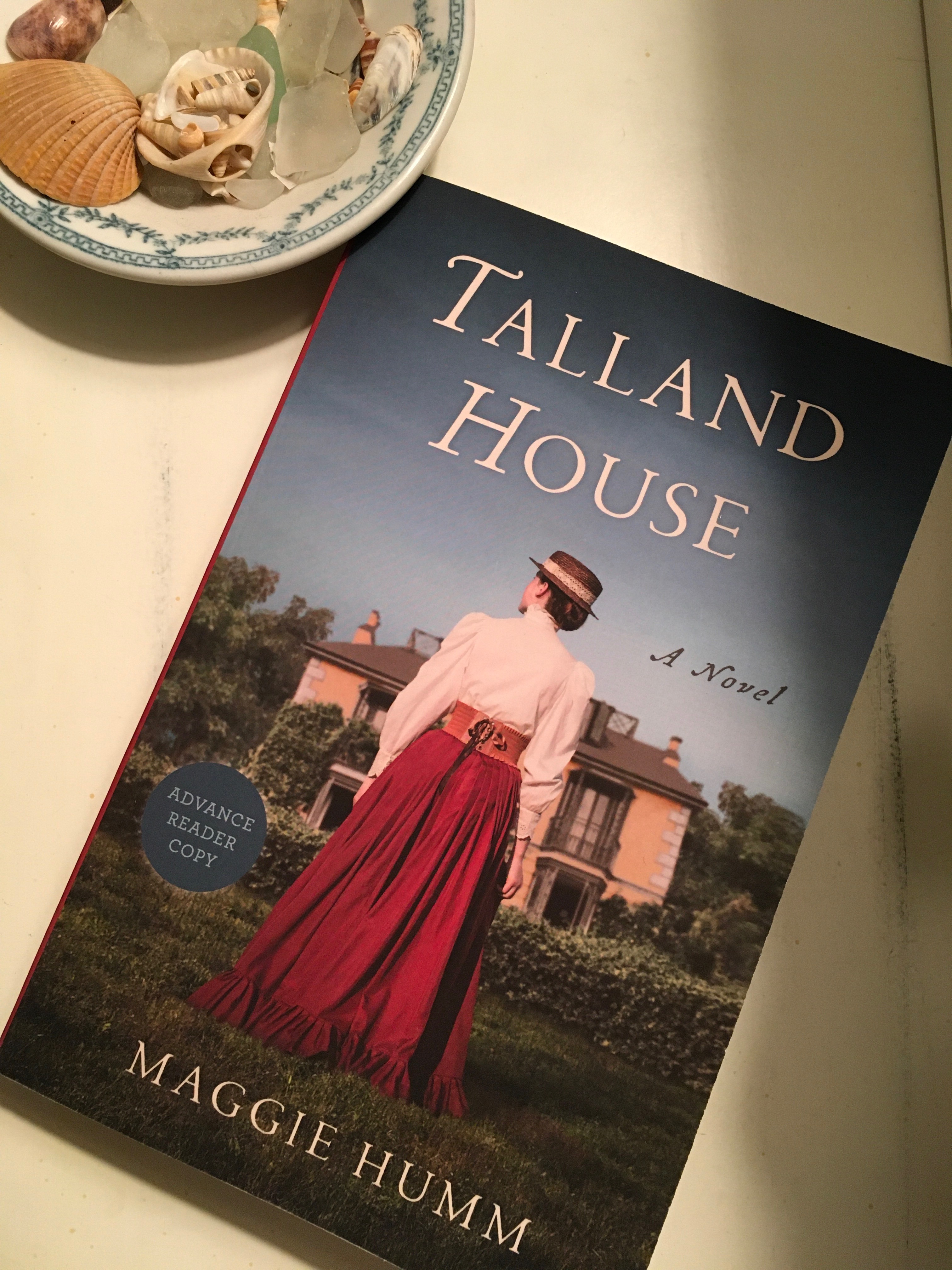
The opportunity came in March, when I saw on Facebook that Maggie had advance reader’s copies in her grasp. After meeting Maggie at many Woolf conferences, I consider her a friend. So I contacted her and asked for a copy. She immediately promised to send one.

Pandemic realities on both sides of the pond

A few hours later, pandemic reality hit her. Recalling that the coronavirus had pretty much grounded all international flights, thereby shutting down international mail delivery, Maggie realized that a copy mailed from England would be unlikely to reach me. She put me in touch with her U.S. publicist to obtain a copy stateside instead.

The book arrived quickly, and I expected to jump right in. But my pandemic reality meant I had difficulty focusing on Maggie’s book — or any book — until recently. That made me late finishing the novel and late posting about it here as well. But since it is now available on Amazon, better late than never. So here goes.

Talland House fills in and illuminates

Maggie, emeritus professor of cultural studies at the University of East London, is the author or editor of 14 books, with the last three focused on Woolf and the arts. So it is only natural that in her first novel, Talland House, Maggie focuses on artist Lily Briscoe from To the Lighthouse.

To that end, Talland House fills in Lily’s back story — the death of her mother, her art studies in Paris and St. Ives, her work as a nurse during the Great War, and her involvement in the suffrage movement. Set between 1900 and 1918 in both Cornwall and London, it also provides a prequel to Woolf’s novel and reimagines that work from Lily’s perspective.

That reimagining includes Mrs. Ramsay’s demise. Her death, mentioned briefly and parenthetically in Woolf’s novel, is “discovered” or explained in Maggie’s novel. But I will include no spoilers here.

While conducting research to write the novel, Maggie pored over old photos of St. Ives, as well as Cornish newspapers, artists’ memoirs, and art journals to get a feel for the seaside town and its art community during the years the novel covers.

St. Ives Bay, June 2004

The extent of her research shows in her luminous prose that paints a compelling and colorful picture of St. Ives and its charms, the location of all of Woolf’s novel and much of Talland House. The picture is so complete — from the view of the lighthouse from Talland House to the fishing boats in the harbor — that one is transported back in time to the cobblestone streets of the Cornish town.

References slipped into a must-read

Woolf scholars and readers will delight in catching the specific references to Woolf’s work that Maggie slips into this historical novel.

Lily makes note of Mr. Ramsay’s boots and his recitation of Tennyson’s poems. She recalls moving the salt cellar at dinner and describes the animal skull on the nursery wall and the tapping sound of the window blind’s acorn on the nursery floor. And in a fresh take-off on Woolf’s famous line in “Thoughts on Peace in an Air Raid” (1940), “Thinking is my fighting,” Lily proclaims that painting is hers.

If you are a fan of Woolf, this is a must-read. If you are not, it will make you want to become one, just so you can connect this enchanting novel to Woolf’s works.

More on the novel

Talland House was shortlisted for the Impress and Fresher Fiction prizes in 2017 (as Who Killed Mrs. Ramsay?) and the Retreat West and Eyelands prizes in 2018.

Read more about Talland House:

Maggie Humm has brilliantly filled in the edges beyond Woolf’s canvas; she has a deep, awe-inspiring understanding of the role of the visual in Woolf’s work, and here she reveals that she also has a novelist’s gift to create something new, that has its own imaginative life, from that understanding. -Lauren Elkin, author of the award-winning Flaneuse

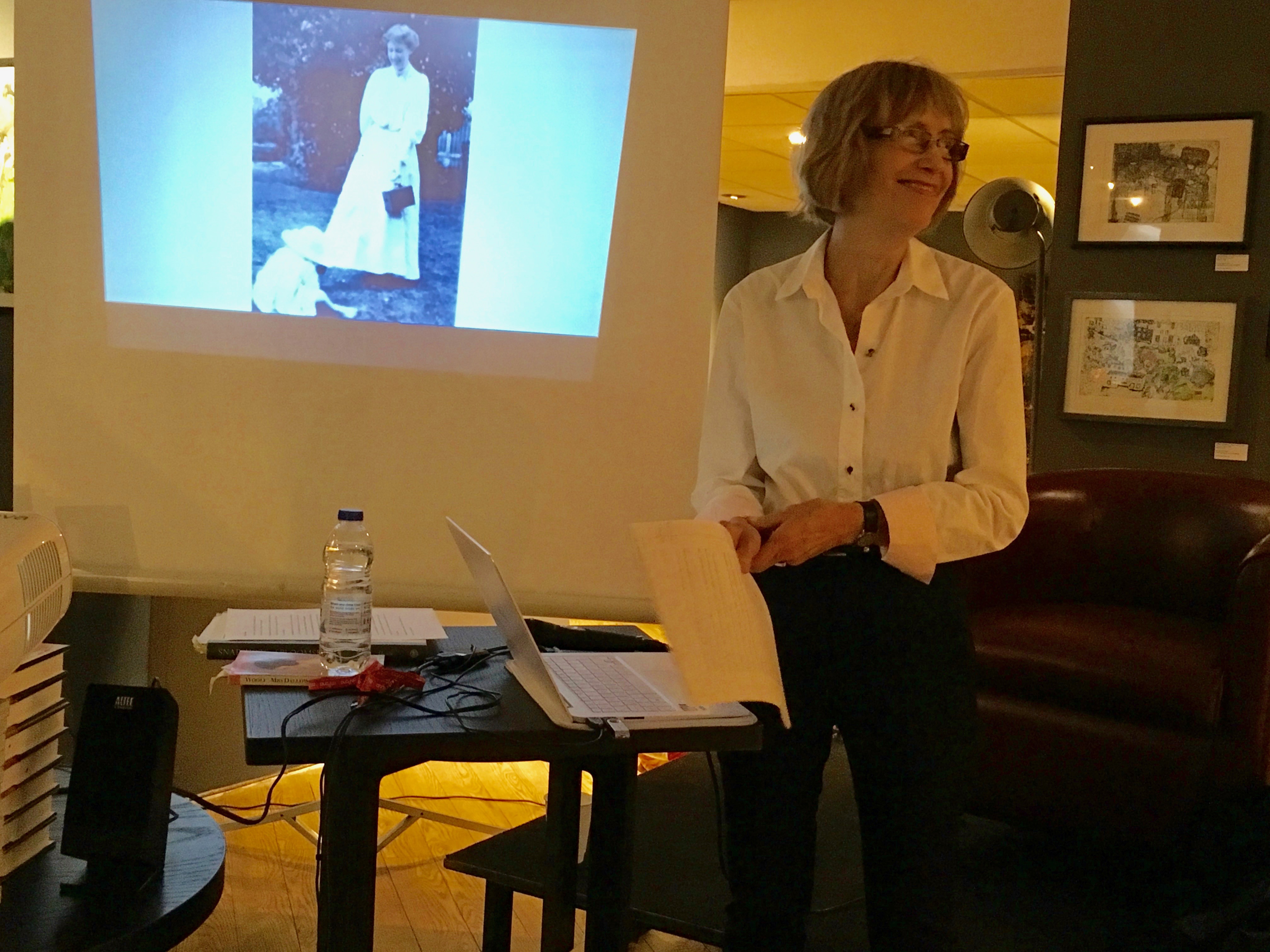
Maggie Humm talking about Virginia Woolf and her photo albums at Waterstone’s Gower Street during Dalloway Day celebrations in London in 2018.
 

Read Full Post »

One day walking round Tavistock Square I made up, as I sometimes make up my books, ‘To the Lighthouse’ – Virginia Woolf.

That quote is the inspiration for an illustrated pamphlet published last month and created by artist Louisa Amelia Albani. Titled A Moment in the Life of Virginia Woolf: A Lighthouse Shone in Tavistock Square, the booklet visually reimagines this ‘moment’ on a summer afternoon in London’s Tavistock Square in 1925.

To do so, it uses Woolf’s own words from her letters and diaries, along with excerpts from To the Lighthouse (1927).

I ordered a copy of Albani’s pamphlet last week. It hasn’t arrived from London yet, but I did get a thank you email for my order directly from Albani — an unexpected but lovely treat.

Art exhibit too

The artist also has an online art exhibition with the same title. The exhibit includes more than a dozen pieces based on Woolf. Many of them are already sold, so if you are interested in an original piece of art connected to Woolf, take a look now.

Below is a video of the project that the artist has posted on YouTube.


Read Full Post »

Congratulations to Kristin Czarnecki, current president of the International Virginia Woolf Society, on the publication of her memoir—The First Kristin: The Story of a Naming. While the book focuses on Kristin’s unique story, the fact that Virginia Woolf is an important part of Kristin’s life makes Woolf germane to her personal narrative as well.

Her parents named their firstborn Kristin for the fictional Kristin Lavransdatter by Sigrid Undset. The child died tragically at age three. Eight years later, after having another daughter and a son, they had a daughter whom they named Kristin.

Her mother told her they loved the name: “We didn’t name you after her.” But the fact of it and the need to understand and adapt to this unusual circumstance have weighed heavily on Kristin throughout her life.

Of bonds and memories

The word necronym refers to a name shared with a dead sibling. A not uncommon occurrence during times of high infant mortality, it’s unusual now, and some believe the second bearer of the name might be haunted by it. Kristin establishes her groundwork early: “Have I been haunted? By the thought of my parents’ grief, yes. By having the name, no.” She adds that she and the first Kristin have shared “a very close conspiracy,” citing Virginia Woolf’s description of her bond with her sister Vanessa.

Kristin explores her motivations and actions and how they relate to the first Kristin. Her speculations—“Who can pinpoint why we are the way we are. And who’s to say our memories bear any relation to the way things actually were?”—recall Woolf in “A Sketch of the Past” when she questions the reliability and volatility of memory.

Woolf writes in “Sketch” of her childhood days at St. Ives: “If life has a base that it stands upon; if it is a bowl that one fills and fills and fills—then my bowl without a doubt stands upon this memory.” Kristin in turn recalls happy childhood summers in Rockport, Massachusetts: “In the impact upon us of summers by the sea, Virginia Woolf and I are kindred spirits.”

Laying things to rest

We read memoirs to learn about others’ lives and to reflect on our own. Two things impressed me from reading this book. One, at a personal level, the question of how I or anyone would have felt in Kristin’s circumstances. The other is my interest in the construction of memoirs.

Conjuring Woolf’s “I now and I then” Kristin has managed to draw from two aspects of herself, the child who grew up under this considerable weight and the curious scholar who explores every nuance. She distances herself when she consults and absorbs the relevant literature, piecing it into the fabric of the story.

Just as Woolf claimed to have laid her parents to rest after writing To the Lighthouse, so Kristin considers her memoir in a similar way. It was something she needed to do, and the process opened up valuable channels of communication with her parents and siblings. She’ll never forget the first Kristin, but now, perhaps, she can move on.

Where to order it

Kristin’s memoir is available from Main Street Rag.

Read Full Post »

From the BBC Radio Drama Collection come adaptations of seven of Virginia Woolf’s pioneering modernist novels, available on CD and as a digital download.

Out since last April, each is a full-cast dramatization by such notable actors as Vanessa Redgrave and Kristin Scott-Thomas. Each includes sound effects — background chatter and the pouring of tea in Night and Day; horses’ hoofs pounding the road and trumpets sounding in Orlando; the gramophone playing, the cows mooing, and the audience clapping in Between the Acts.

The original radio broadcasts took place between October 1980 and May 2012.

The audio versions of Woolf’s novels are available in the UK and the U.S. The cost of the 14-disk CD set in the U.S. is around $30. Playing time is 11 hours and 55 minutes.

Novels included

  • The Voyage Out (1915)
  • Night and Day (1919)
  • Mrs. Dalloway (1925)
  • To the Lighthouse (1927)
  • Orlando (1928)
  • The Waves (1931)
  • Between the Acts (1941)

Read Full Post »

Editor’s Note: Maggie Humm provided Blogging Woolf with the story and images of her experience working with France Culture radio and the French TV channel ARTE’s series Invitation Au Voyage on programs about Virginia Woolf.

By Maggie Humm

A cold, windy day in April 2019 saw me walking and talking in Kensington for France Culture radio about Virginia Woolf’s London childhood and her own daily walks with her father. Thankfully, my talk didn’t have to be in French or delivered sideways as in The West Wing.

Maggie Humm with the French TV channel ARTE’s series Invitation Au Voyage in St. Ives

France Culture has over 3,000 podcasts and items about Virginia Woolf. Director Simonetta Greggio simply said, “I love Woolf.”

Woolf and France past

As Blogging Woolf readers know, Charles Mauron translated “Time Passes” from To the Lighthouse in Commerce as early as Winter 1926, and Woolf’s works were translated into French more quickly than into other languages.

Woolf knew several leading French intellectuals including Mauron – Jacques Raverat and Jacques-Émile Blanche – and the translation of Mrs Dalloway had a preface by André Maurois. Simone de Beauvoir discusses Woolf in The Second Sex.

To the lighthouse

Top of my bucket list however was visiting Godrevy Lighthouse thanks to Lolita Rivé of Elephant Productions who invited me to present “Cornwall Through the Eyes of Virginia Woolf” as part of the French TV channel ARTE’s series Invitation au Voyage.

It’s not possible to convey my excitement and delight reading To the Lighthouse at Godrevy Lighthouse, as well as reading The Waves on St. Ives beach.

Maggie Humm heads to Godrevy Lighthouse with the French TV channel ARTE’s series Invitation Au Voyage. As Woolf said about St. Ives Regatta Day – it made her ‘think of a French picture’ (MOB: 132). Vive la France!

Read Full Post »

« Newer Posts - Older Posts »