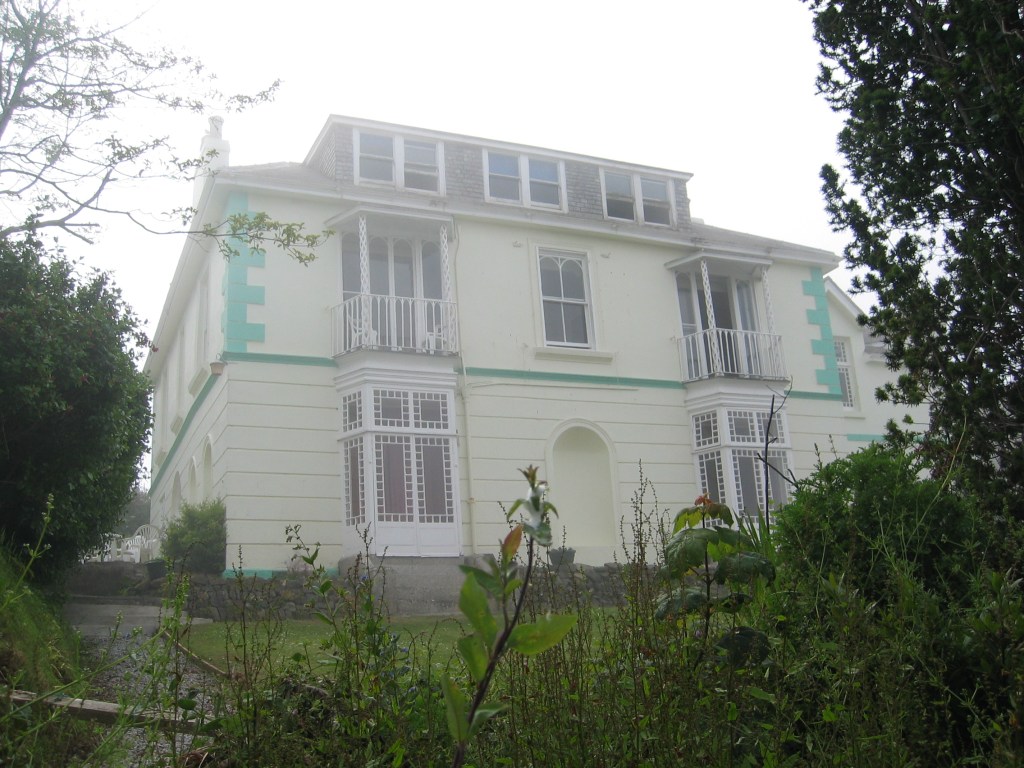
Such Friends blogger Kathleen Dixon Donnelly, who writes about famous literary friends, including the Bloomsbury Group, shared this post about Virginia Woolf and Monk’s House in 1921.
Oh, what a damned bore!” Virginia Woolf, 39, had written to a friend this past summer. She had been ill—and not working—for so long. But now that it is autumn, with lovely weather and long walks out here in the countryside, she is feeling better and writing better than before. Monk’s House, Rodmell Virginia and […]
Editor’s Note: I did not know Laura Marcus personally, but her passing on Sept. 22 has prompted tributes from scholars and institutions around the world. Here is one of them, posted on the English faculty web page of the University of Oxford, where she was a Fellow of New College. Tributes to her scholarship, as well as her teaching and friendship, were also posted on social media.
Laura Marcus
Professor Laura Marcus
We are devastated to report the death on Wednesday 22 September 2021 after a short illness of Professor Laura Marcus FBA, Goldsmiths Professor of English Literature in the Faculty of English and Fellow of New College. In her influential work on modernism and Virginia Woolf, on life-writing and fiction and film, Professor Marcus was admired for her immense scholarly range, her mastery of theory and narrative and genres, her deep knowledge of literary and cultural connections and influences, and her illuminating, serious interest in, and practice of, feminist thought. Her book publications include Auto/biographical Discourses: Theory, Criticism, Practice (1994), Virginia Woolf: Writers and their Work (1997/2004), The Tenth Muse: Writing about Cinema in the Modernist Period (2007). She was bringing to completion a new monograph built on her project ‘Rhythmical Subjects: the measures of the modern’ which the Faculty of English and Oxford University Press hope to see through to publication.
Her service to her profession and her subject was unstinting and inspiring. She was elected as a Fellow of the British Academy in 2011 and was a much-loved, passionately engaged supervisor and mentor of other scholars at all stages of their careers. As a Delegate at Oxford University Press for approaching ten years, Laura read and evaluated hundreds of proposals across the span of literary studies and music and had a shaping influence on the Literature list, working closely with its editors. Colleagues at all levels of the Press found her to be a wonderful and supportive adviser, full of warmth and of interest in their work.
Miles Young, Warden of New College says, “New College grieves for Laura Marcus: she loved this college which had been her Oxford home for over ten years, and we loved her. Continuing a distinguished succession of Goldsmiths’ Professors, she added a particular lustre to the title through the creative breadth of her research and writing. She will be missed as a colleague who represented the epitome of academic courtesy, conscience and companionship.”
Professor Isobel Armstrong remembers: “Laura was a friend for almost forty years. These are my memories of her when she taught at Southampton. She seemed born with a formidable archival knowledge, worn so lightly. Unique was her intellectual charm and generosity as interlocutor: she would listen intently to someone’s ideas and then give them back creatively transformed, expanded and deepened, a wonderful gift even at her most stringent. She was innately witty – ‘you have to love a book enough to begin writing it and hate it enough to finish it.’”
Dame Hermione Lee FBA, FRSL speaks for so many of us who had the privilege of knowing Laura Marcus: “Writing on autobiography, Laura quoted Katherine Mansfield’s idea of the self as a plant which comes to the light: ‘and – we are alive – we are flowering for our moment upon the earth’. That flowering self of hers was grand, vital and lavish, and gave colour and brightness to all who encountered it. ”
She was inspiring, generous-spirited and wonderful company. What sad, sad news: a huge loss to the #modernist research community and #academia in general. Thoughts today are with all who knew, valued and loved #LauraMarcus. https://t.co/gKE5mHHXll
It’s nearly time for Woolf Salon No. 13, so read one or more (or none!) of Virginia Woolf’s six short essays included in The London Scene and plan to join Woolf scholars and common readers around the globe for the Sept. 24 Woolf Salon on Zoom.
Details
Hosts: Salon Conspirators Day: Friday, 24 September 2021 Time: 3 p.m.–5 p.m. ET / Noon –2 p.m PT / 4 p.m. – 6 p.m. Brasilia / 8 p.m. – 10 p.m. BST / 9 p.m. – 11 p.m. CEST
Anyone can join the group, which meets on the third or fourth Friday of each month via Zoom and focuses on a single topic or text. Just contact woolfsalonproject@gmail.com to sign up for the email list and receive the Zoom link.
About The London Scene
Originally published bi-monthly in Good Housekeeping between December 1931 and December 1932, the six essays in The London Scene provide Virginia Woolf’s musings on the street hauntings of which she was most found.
These essays include:
The Docks of London
Oxford Street Tide
Great Men’s Houses
Abbeys and Cathedrals
“This is the House of Commons”
Portrait of a Londoner
Where to find them and how much to read
The essays are available as freestanding collections, published in 2004, 2005, and 2013. They can also instantly be instantly accessed as an e-book. They also appear in Volume 5 of The Essays of Virginia Woolf, edited by Stuart Clarke.
“If you can’t get through all six essays, no problem! Just read what you’re able and join us anyway. It might be best, actually, if folks spend their time focusing on just one or two of the pieces,” said Salon co-organizer Benjamin Hagen, who also serves as president of the International Virginia Woolf Society.
Background on the Salon
The Salon Conspirators — Hagen, Shilo McGiff, Amy Smith, and Drew Shannon — began the Woolf Salon Project in July 2020 to provide opportunities for conversation and conviviality among Woolf-interested scholars, students, and common readers during and beyond the COVID-19 pandemic.
Have we killed the self-sacrificing Angel in the House? If an exhibit by photographer Lanie McNulty is to be believed, the answer is no.
Virginia Woolf advocated for such a death. In “Professions for Women” read to the Women’s Service League in 1931 and published posthumously in The Death of the Moth and Other Essays (1942), she wrote that “Killing the Angel in the House was part of the occupation of a woman writer.”
A woman writer, she believed, had to kill off the respectable Victorian “angel,” popularized by Coventry Patmore in his 1858 poem. The angel, an ideal woman who lives to serve others, particularly males, neglects her own personal needs and certainly never considers herself to have any professional aspirations.
Pandemic forces women into angel roles
McNulty, a New York based photographer and social activist, was inspired by the current pandemic to turn her lens on domestic interiors. In doing so, she produced stunning photographs that depict women at home alone and with children, husbands, parents, and friends.
Created in collaboration with her subjects, McNulty’s photographs starkly expose what the pandemic year has made clearer than ever — that women play an outsized role trying to keep it all together. Her photos make up the exhibit “The Angel in the House.”
McNulty is not the first to make a play on the death of the angel for an artistic purpose. A literary journal titled Killing the Angel (pictured above) launched in 2013 but now appears to be defunct.
Exhibit and book
Now on display at New York’s Planthouse, The Angel in the House opened today and runs through Oct. 23 by appointment.
If you can’t make it to the exhibit, you can buy the book.
The 31st Annual International Conference on Virginia Woolf, with its theme “Virginia Woolf and Ethics,” has issued a call for papers, with 250-word abstracts due Jan. 31, 2022.
Next year’s conference, which will be held June 9-12, 2022, at Lamar University in Beaumont, Texas, aims to promote conversation about the topic across disciplinary boundaries. Conference organizers hope to explore Woolf’s engagement with specific ethical issues in her writing.
These may include, but are not limited to, war and pacifism, human rights, human–animal relations, environmental ethics, bioethics, fascism, empire, patriarchy,
racism and bigotry.
Woolf in relation to ethical approaches
The theme also suggests a reconsideration of Woolf in relation to various ethical approaches. For instance, participants may wish to read Woolf’s thought in conversation with care ethics, narrative ethics, moral psychology, moral imagination, moral luck, virtue ethics, deontology, utilitarianism, communitarianism, liberalism, religious or spiritual ethics (Christian, Quaker, Jewish, Buddhist, Indigenous, etc.), or other moral theories or concepts.
Papers might address the moral philosophy of Woolf’s milieu, including the thought of Russell, Moore or Leslie Stephen. Participants may wish to consider Woolf’s thought with continental theorists who address ethical concerns.
Organizers invite participants to consider Woolf in relation to broader ethical considerations, such as the relation of ethics to reading practices (or to literature); ethics of teaching, scholarly community and academic life; and secularism, religion and/or mysticism in Woolf’s thinking.
Woolf as an ethical theorist
Papers may also address reading Woolf as an ethical (or social or political) theorist. What might a Woolfian ethic look like? How might we read Woolf’s aesthetic practices in ethical terms (e.g. narrative indeterminacy and the cultivation of certain
forms of attention, moral imagination, or empathy)? How does Woolf navigate competing demands of justice, individual liberty and rights, and collectivity and social responsibility, in her fiction and non-fiction?
Non-English presentations welcome
The conference welcomes proposals for presentations in languages other than English to foster a more open exchange at this international conference. A few caveats: the organizers ask that all abstracts and proposals be submitted in English. Also, to ensure a more effective exchange among all participants, we ask that non-English presentations be accompanied by a handout of main points in English as well as (if possible) a PowerPoint presentation in English. Note that Q&A sessions will be conducted in English as well.
Where to send abstracts
Abstracts (250 words) should be sent to Virginia.Woolf@lamar.edu by 31
January 2022. Check the call for papers for more details.
Participants among the books at the Mercantile Library during a reception at the 29th Annual International Conference on Virginia Woolf, the last in-person Woolf conference before the pandemic hit.