Feeds:
Posts
Comments

With Russia’s full-scale invasion of Ukraine 13 days old, I can’t get Virginia Woolf’s August 1940 essay “Thoughts on Peace in an Air Raid” out of my mind.

In it, she writes:

Unless we can think peace into existence we — not this one body in this one bed but millions of bodies yet to be born — will lie in the same darkness and hear the same death rattle overhead (173).

As I write this, the Ukrainian people are lying in that same darkness. They are hearing that same death rattle.

One Kyiv woman’s story

This week, I read of a 74-year-old woman who emerged from the basement of her home after 10 days to find everything in sight destroyed and dead bodies lying in the street.

For most of that time, Katerina Oleksiivna had survived without heat, electricity, or water. She had existed on canned vegetables and stale bread while listening to explosions overhead and feeling their reverberations beneath the ground.

A bomb drops. All the windows rattle. The anti-aircraft guns are getting active. Up there on the hill under a net tagged with strips of green and brown stuff to imitate the hues of autumn leaves guns are concealed. Now they all fire at once.

Echoes of Woolf

That could have been Katerina Oleksiivna’s description of her ordeal. But it is not.

Instead, those are some of Woolf’s words written 82 years ago in “Thoughts on Peace in an Air Raid.” They recall the fear she experienced during the Second World War as she heard German planes fly over the Sussex countryside. One plane flew so close that she and Leonard were forced to shelter under a tree in their garden at Monk’s House.

It was not Woolf’s first go-round at war. She had already lived through four years of the Great War, listening to bombing from across the English Channel and hiding under a basement kitchen table in Richmond during air raids (D1, 123-4). From 1939 until March 28, 1941, when she committed suicide by walking into the River Ouse, she lived through the trauma and deprivations of a second.

Is the war everywhere? – Katarina Oleksiivna, 74, of Kyiv, Ukraine

Repeating history

As the brave Ukrainian people defend themselves against the Russians, my heart aches. It aches at the memory of my maternal grandparents, who emigrated to the U.S. from Ukraine in 1923, bringing their Ukrainian culture with them and sharing it with me. It aches at the repetition of some of our modern world’s bleakest history. It aches at our failure to spend the last 82 years thinking — and acting — peace into existence, as Woolf wished. And it aches at the thought that we may never do so.

A display at the “People Power Fighting for Peace” exhibit at the Imperial War Museum in London in July 2017.

For as Woolf says, war perpetuates itself, rippling infinitely outwards in time and space, unless we stop it by turning our minds and our energy towards creating universal peace.

Thinking peace into existence

For Woolf, that means thinking peace into existence by thinking against the current, by thinking against the nationalism that dictators and autocrats like Adolf Hitler and Vladimir Putin promote through propaganda and force.

And in “Thoughts on Peace in an Air Raid,” Woolf maintains that the primary requirement for fostering peace among all peoples of our world is the act of artistic creation. It is, she maintains, the antithesis to war’s destruction.

For her, “the creative power at once brings the whole universe to order.” Artistic creation helps to make sense of the world, a world that in the midst of war makes little sense at all.

Woolf certainly did her part to think — and write — peace into existence. May each of us do ours as well. #StandWithUkraine

Post-It notes written by visitors became part of the peace symbol display pictured above at the “People Power Fighting for Peace” exhibit at the Imperial War Museum in London in July 2017.
Today is the 25th World Book Day. And although it is a day targeted to developing a reading habit in children, adults can celebrate as well. What better author to celebrate with than Virginia Woolf?

To that end, I have two resources for you.

Virginia Woolf Starter Pack

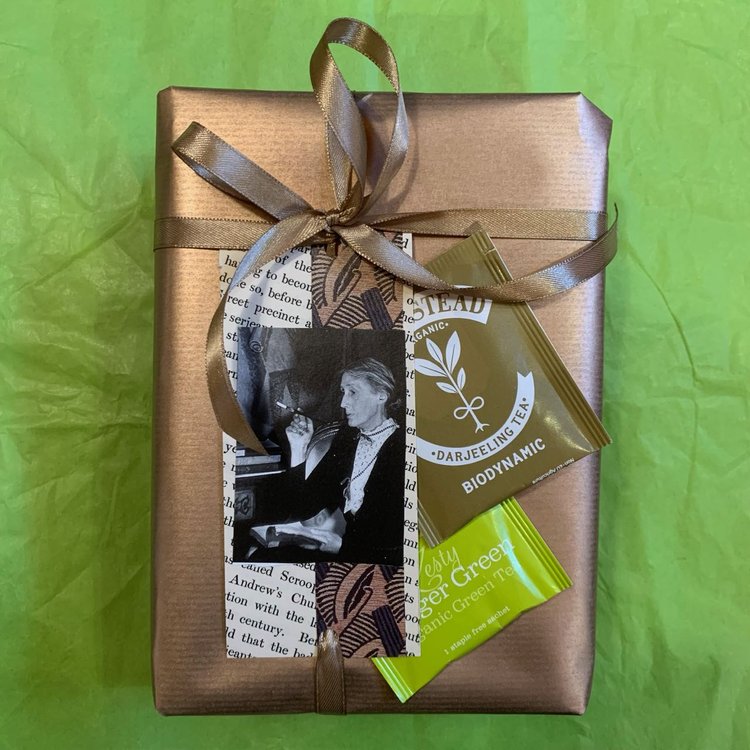
The first is a Virginia Woolf Starter Pack. Offered by Much Ado Books, it includes four Woolf classics.

They are gift wrapped and embellished with a Woolf bookmark and a couple of tea bags ready for brewing as you settle in to read the four paperbacks in the set:

  • A Room of One’s Own (1929)
  • Mrs. Dalloway (1925)
  • To the Lighthouse (1927)
  • Orlando (1928)

Guide on where to start with Woolf

The second comes from the New York Public Library. All four of the volumes included in the starter pack, along with The Waves (1931), are included in the guide on “Where to Start With Virginia Woolf” provided by the NYPL.

The library includes a brief synopsis of each novel and recommends reading them in this order:

  1. Mrs. Dalloway
  2. A Room of One’s Own
  3. To the Lighthouse
  4. The Waves
  5. Orlando

A book list of her own

Meanwhile, Woolf scholar Maggie Humm’s Twitter post today included a list of the books Woolf liked and disliked most in 1924, 98 years ago.

Virginia Woolf published Jacob’s Room 100 years ago. And since then, many readers have wandered down Lamb’s Conduit Street in London, speculating about where Jacob lived and what he would have seen.

Pillar box at the corner of Lamb’s Conduit Street and Great Ormond Street, outside Ryman Stationery in London.

I, myself, have done just that, taking particular notice — and photos — of the classic red pillar box on the corner and stopping at The Lamb pub, which existed in Jacob’s time, for a meal.

Woolf puts London at the novel’s heart

In a piece posted on the London Fictions website, Robert Todd, member of the Virginia Woolf Society of Great Britain, explores, in detail, the way Woolf puts London at the heart of her novel after Jacob reaches the age of 22 in 1909.

Woolf’s eight chapters that cover the years from 1909 on “display, amongst so much else, a vivid picture of London and Jacob’s relation to it,” according to Todd.

The London of Jacob’s Room was a young man’s world of hopes, dreams and pleasure, before responsibility is assumed.  It was also a young woman’s world, Virginia Woolf’s, after she moved to Bloomsbury in 1904.  – Robert Todd

Walking with Jacob Flanders

For that reason, Todd’s March 2020 article includes a Jacob’s Room walk, beginning with Jacob’s lodging-house on Lamb’s Conduit Street in Bloomsbury.

Persephone Books at 59 Lamb’s Conduit Street, London, in 2019. The shop moved to Bath in 2021.

He puts the location of Jacob’s two-room first floor flat at #59, the former site of Persephone Books, known for reprinting neglected fiction and non-fiction by mid-20th century (mostly) women writers.

With a sitting room that overlooked the street, Jacob had a view of a confectioner’s shop and the famous letter-box pictured above.

Todd’s journeys with Jacob take us beyond Bloomsbury, however. With him, we travel to Covent Garden, St. Paul’s Cathedral, Piccadilly, Hyde Park, and Parliament Hill Fields.

Woolf herself lived nearby

Plaque at 38 Brunswick Square

Todd goes on to share how Woolf’s experiences while living nearby at 38 Brunswick Square influenced the sights and the action in Jacob’s Room. The University of London School of Pharmacy has stood on the site of that address since around 1936, according to Jean Moorcroft Wilson in Virginia Woolf: Life and London (1987, 2011).

Todd also speculates about how Woolf’s visits to the two rooms of friend Saxon Sydney-Turner may have influenced her descriptions of Jacob’s rooms.

A protest against war in her own voice

Jacob’s Room, of course, is not just a novel about location. As Julia Briggs notes in her biography Virginia Woolf: An Inner Life (2005), Woolf’s third novel was a protest against World War I and the “shocking impersonality of its killing machine” (84).

Jacob was just one of the nearly one million British and Commonwealth soldiers who perished in that conflict. But the enormity of that loss prompted Woolf to focus on the fate of just one individual in order to make some sense of the tragic conflict, according to Briggs.

Already a pacifist, in a Jan. 23, 1916, letter to Margaret Llewelyn Davis, Woolf claimed she had become “steadily more feminist'” due to “the preposterous masculine fiction” of wartime propaganda in mainstream media (L2, 76).

Three months before the novel was published, Woolf wrote in a July 26, 1922, diary entry that she had “found out how to begin (at 40) to say something in my own voice” (D2, 186).

Publishing record and reviews

Jacob’s Room was published on Oct. 27, 1922, in an edition of 1,200 copies. Wrapped in a dust jacket designed by Vanessa Bell, it sold for seven shillings and sixpence.

An additional 1,000 copies were printed soon thereafter, but by the end of 1923, fewer than 1,500 copies had been sold. The novel did, however, turn a small profit.

Woolf’s novel received mixed reviews. It was described as experimental, impressionist, and adventurous. It was criticized for its form and its lack of realism. It was also compared to the work of James Joyce and Dorothy Richardson.

In a diary entry dated Nov. 12, 1922, Woolf herself described it as “the starting point for fresh adventures” (D2, 214).

In good company

It’s no wonder that the work was compared to James Joyce’s, for Woolf’s 1922 novel was in the good company of that work and others.

James Joyce’s Ulysses, was published the same year, along with T.S. Eliot’s The Wasteland, and F. Scott Fitzgerald’s The Beautiful and Damned.

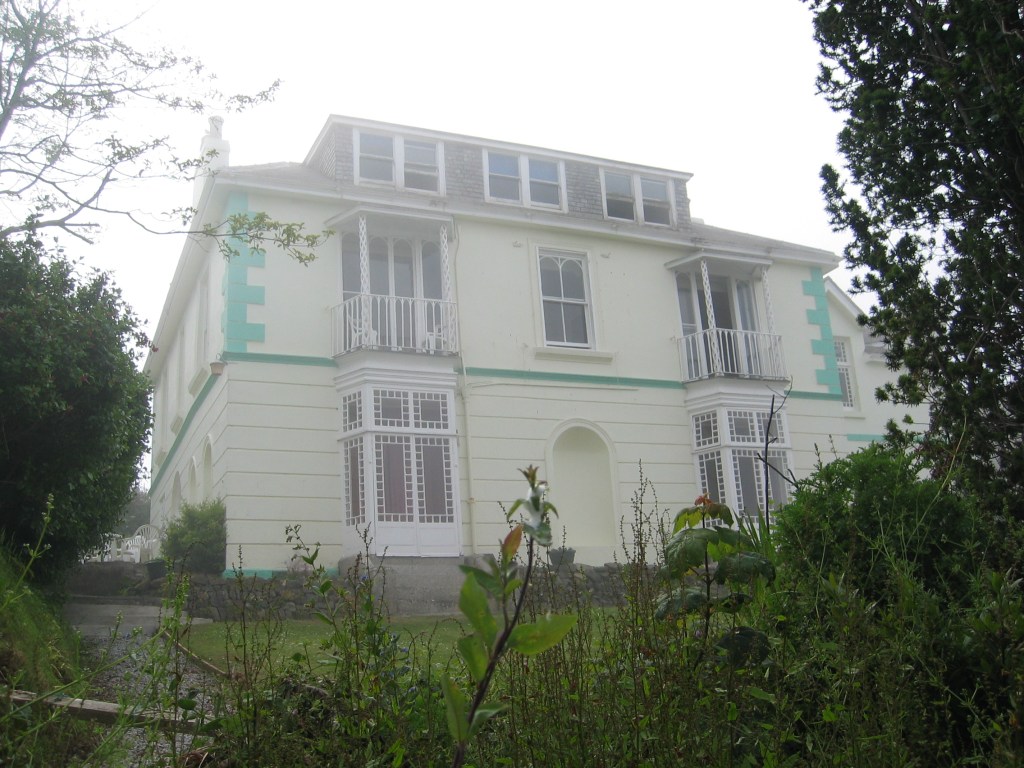
View of the front right corner of Talland House (2004)

Never underestimate the power of a Virginia Woolf scholar who has a Virginia Woolf society behind her.

Thanks to the efforts of Maggie Humm, a member of the executive council of the Virginia Woolf Society of Great Britain, a plaque commemorating the time Virginia Woolf spent in St. Ives, Cornwall, will be installed at Talland House.

Humm, author of the novel Talland House,was a major force behind the effort. She advocated for the move by providing St. Ives Town Council with useful and persuasive information about the summers Woolf spent at Talland House until the age of 12.

We first reported news about this effort last October. But now, we have more details and photos to share, as tweeted by @MaggieHumm1.

Timeline of the effort and fundraising

According to a story in the Jan. 28, 2022, issue of The St Ives Times & Echo, the British society first submitted a proposal for such a plaque in October of 2020. However, the Town Council did not support it due to lack of funding.

Cornwall Council and local MP Derek Thomas supported later requests from the VWSGB, which resulted in the St. Ives Town Council reversing its stand. Last month, the Council learned that the owner of Talland House also supported the move and the Council approved it by an unanimous vote.

The plaque, which will be black, will be hand-fired in Cornwall. It will be installed on the right-hand side of the east elevation on the second story of the house.

Funding details have yet to be established, but St. Ives Town Council, in partnership with the VWSGB, has launched a fundraising effort on Spacehive.

Part of a heritage trail?

Woolf’s plaque may be part of a larger effort in St. Ives, one that would use the plaques to recognize other notable people that are part of the town’s heritage.

If the heritage tied up in this remarkable property had been fully understood at an early time it may well have become the town’s main ‘heritage asset’. – “Virginia Woolf to finally be celebrated on a plaque at Talland House,” The St Ives Times & Echo, Jan. 28, 2022.

Front page of the Jan. 28, 2022, issue of the St Ives Times & Echo

Scholar Elisa Kay Sparks is known for her interest in flowers. Specifically, Virginia Woolf and flowers. She can usually be counted on to present a paper on that topic at annual Woolf conferences. And she has an amazing blog dedicated to the topic.

A Virginia Woolf Herbarium by Elisa Kay Sparks

Flowers from one to 99

A Virginia Woolf Herbarium describes itself as “a collection of essays on flowers in the work of Virginia Woolf: fiction, essays, and life-writing.” Each of the site’s 99 essays includes photos of the flower it discusses.

Each flower discussed on the site is referred to at least once in Woolf’s fiction and/or essays. They range from the almond blossom, mentioned only twice in Woolf’s fiction, to red-hot pokers, which appear 13 times.

Counting, researching, and accounting for the flowers

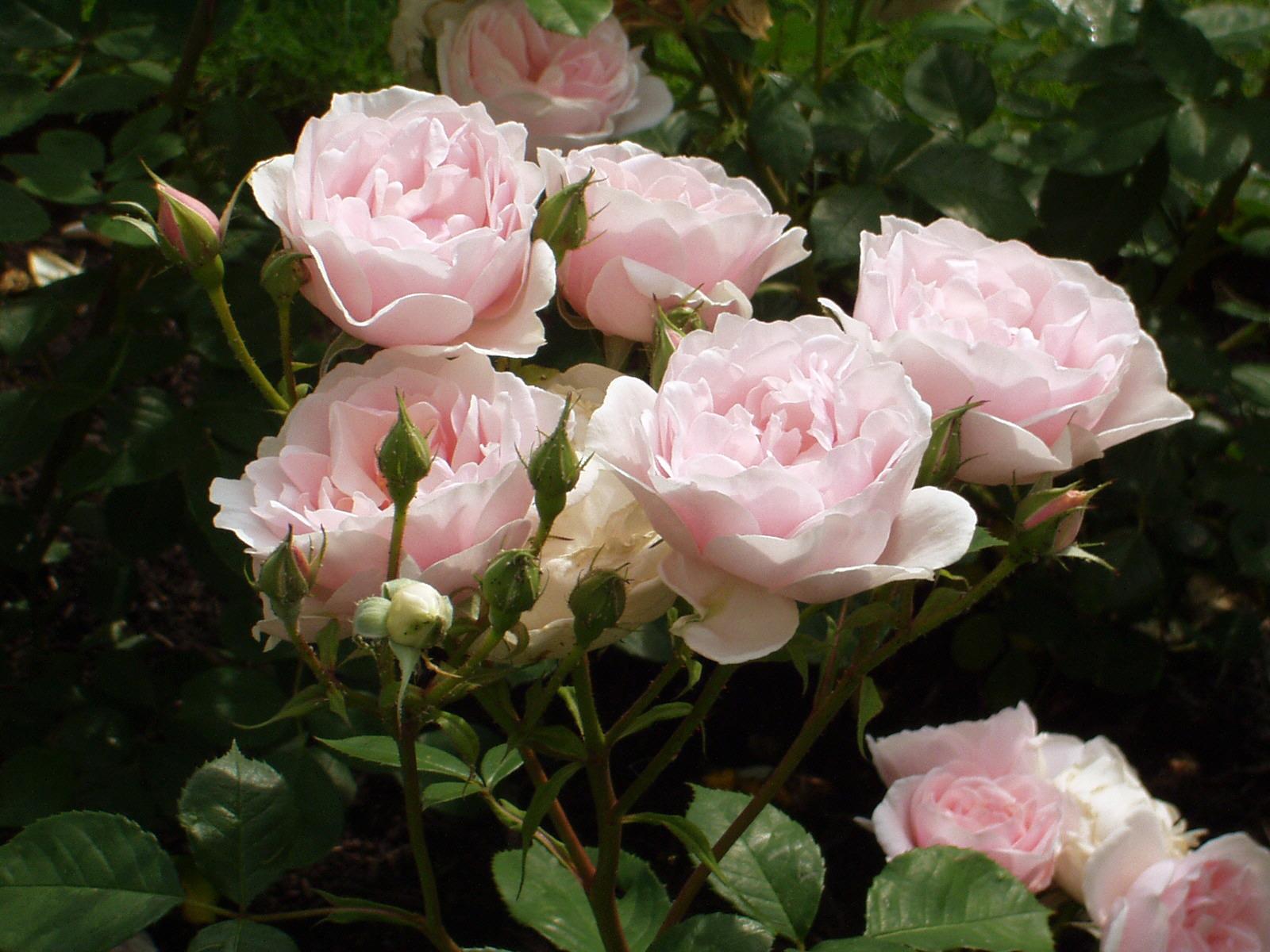
Pale pink roses in the garden of St. Paul’s Cathedral, London. Similar roses frame the doorway of Virginia’s bedroom at Monk’s House.

In fact, Sparks, always meticulous in her research, includes a Flower Count that lists the flowers alphabetically and names the number of times Woolf included it in her writing. For example, Woolf mentions roses more often than any other flower — 250 times, with 162 of those occurring in her fiction.

Sparks breaks the count down into four categories: fiction, essays, diaries and letters, and digital hits.

The chart also includes flower purchases Leonard Woolf mentions in his garden account book. From 1919 to 1950, he kept an exact account of all monies spent on and earned by the garden. From 1920 to 1927, he also kept a separate garden diary. These two small green cloth books with red bindings can be found in the Leonard Woolf Papers in the University of Sussex Library.

In the process of researching Woolf’s use of flowers in her writing, Sparks collected:

  • information on the literary, medicinal, and mythological meanings of flowers;
  • research on the history of gardens and gardening; and
  • research on the social assumptions and practices involving flowers and gardening.

Eventually, she plans to distill all of the information she has collected into a book.

More about Woolf and gardens

Virginia Woolf’s Garden: The Story of the Garden at Monk’s House by Caroline Zoob (2013)

The site also includes pages for Works Cited and an annotated list of the reference works Sparks consulted while doing her work on Woolf and flowers, work I would describe as both comprehensive and ground-breaking.

Caroline Zoob’s book, Virginia Woolf’s Garden: The Story of the Garden at Monk’s House, published in 2013, gives an up-close view of the Woolf’s garden. Cecil Woolf, Leonard’s late nephew, wrote the book’s Foreward.

Literature Cambridge also ran a one-week course on Virginia Woolf’s Gardens in July 2019. Blogging Woolf attended and published daily posts.

Garden at Monk’s House, Sussex home of Virginia and Leonard Woolf

Garden at Charleston, Sussex home of Woolf’s sister Vanessa Bell, Duncan Grant, and Clive Bell.