Editor’s Note: Trudi Tate, director of Literature Cambridge, provided this piece for Blogging Woolf.
Wolfson College at the University of Cambridge
Woolfians are invited to join Literature Cambridge in summer 2020 for a rare opportunity to study Virginia Woolf’s Mrs. Dalloway (1925) alongside writing by some of her most interesting contemporaries.
Reading the 1920s, held July 26-31 at Wolfson College at the University of Cambridge, will provide a week’s intensive study, with lectures, seminars, supervisions, plus visits to places of interest in Cambridge.
Shaping the 20th century
Reading the 1920s explores some of the brilliant writers working after the First World War. The 1920s is a crucial period in the shaping of the entire twentieth century and its literature. It was an extraordinarily productive decade for Woolf: between 1922 and 1931 she wrote many of her greatest works: Jacob’s Room, Mrs. Dalloway, To the Lighthouse, A Room of One’s Own, The Waves, and more.
Woolf was familiar with the works students will study on this course. Some she knew very well, such as “The Waste Land” (1922) and A Passage to India (1924). She had mixed feelings about Lawrence, but admired the best of his work, noting as she finished The Waves that his writing gave her much to think about. We will study his powerful novella collection of 1923, The Fox, The Ladybird, and The Captain’s Doll, plus his joyous nature poetry in Birds, Beasts, and Flowers (also 1923).
Katrina Jacubowicz reads aloud at the summer 2019 Literature Cambridge course, Virginia Woolf’s Gardens.
Lecturers and topics
Alison Hennegan will discuss sexuality and censorship in the 1920s, focusing on The Well of Loneliness (1928). Why was this book by Radclyffe Hall censored while Woolf’s Orlando sold freely?
Peter Jones will explore the thinking of Forster’s Passage to India about India, Britain, and the campaign for Indian independence in the 1920s.
Trudi Tate will look at some powerful and poignant testimonies from the First World War.
Karina Jakubowicz will discuss Mrs. Dalloway and the social system that Woolf so criticized.
This course provides students with a great opportunity to study Woolf, Lawrence, Forster, and others together. The course aims to give a richer understanding of the writings of the 1920s, and of the turbulent history to which they bear witness.
Woolf’s Women July 19-24
Literature Cambridge also runs an intensive summer course on Woolf every year in July. In 2020, from July 19-24, the course will explore Woolf’s Women.
The Virginia Woolf Society of Great Britain will celebrate Virginia Woolf’s birthday on Saturday, Jan. 25, with its 21st annual Virginia Woolf Birthday Lecture featuring Claire Davison “Singing Songs of Sixpence? Virginia Woolf, Ethel Smyth and the languages of music.”
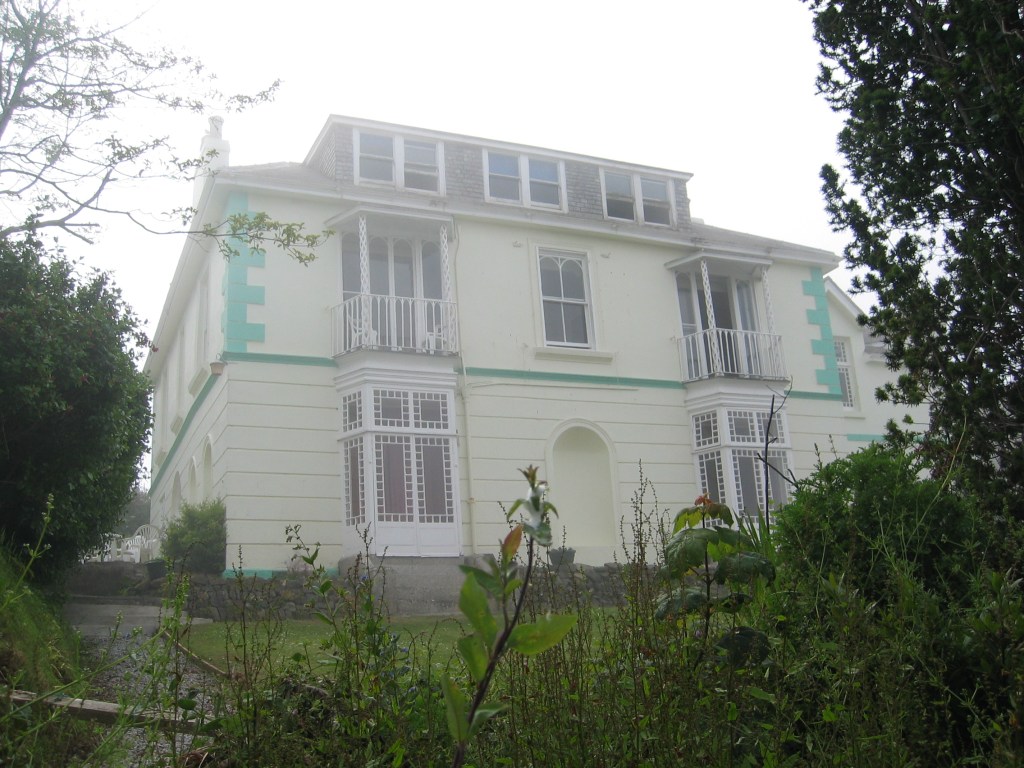
Tavistock Hotel
Davison is Professeur de Literature Moderniste, University Sorbonne Nouvelle, Paris.
Lecture: 2 p.m; doors open at 1:30 p.m. Location: MAL 532, Main Building, 5th floor, Birkbeck College, Malet Street, London WC1E 7HX Wine Reception: 3:15 p.m. Location: Dining room, Tavistock Hotel, WC1H 9EU Cost: £20 Virginia Woolf Society members/ students & concessions, £25 non-members. The price includes a wine reception at the Tavistock Hotel following the lecture and a printed copy of the lecture to be posted.
Tickets: For tickets, please apply to Lynne Newland, send cheques to 84 Waterman Way, London, E1W 2QW, giving email address for receipt of payment; or pay by BACS to Virginia Woolf Society GB, sort code 09-06-66; acct no 40411044. Bank Santander. Reference: initial/surname/BL e.g. LNEWLAND BL. If paying by BACS please notify Lynne at lynne@newlandmail.com.
Accommodations: The Tavistock Hotel is offering a 20% discount for Virginia Woolf society members. Please quote society event and membership number. The group’s contact is Tony Smith, Operations Manager.
This is the third in a new series of posts that will offer a global perspective on Woolf studies, as proposed by Stefano Rozzoni at the 29th Annual International Conference on Virginia Woolf. If you would like to contribute to this series, please contact Blogging Woolf at bloggingwoolf@yahoo.com.
The road to Cincinnati is not long or arduous if you are starting out from downtown Toronto. In fact, it’s nearly a straight shot: taking the 401 West and crossing into the US at Windsor, the I75 South will lead you to your destination after eight or nine hours. I know this because it is the route I took to Woolf and Social Justice: The 29th Annual International Conference on Virginia Woolf, which was held at Mount St. Joseph University this past June.
Speeding towards any other conference, this long and unchallenging trek of highway might have provided an extended opportunity for me, a fourth-year PhD candidate, to stress over the paper I’d be delivering, and the many people I would soon need to meet (and impress). This was not my travel experience to this conference, however.
How come? The answer to that question begins with my acceptance into the conference program last February, and explains a good deal about the hearty welcome I received from all in Cincinnati.
There was, most welcome of all, a summoning together…
Shortly after sending word that I would indeed be presenting, conference organiser Drew Shannon (MSJ) contacted me personally via Facebook Messenger to ask if I had any questions or concerns about the coming gathering.
An enthusiastic first-time conference-goer hopes that his T-shirt will gain him entry to the Woolfians’ inner circles.
Over the course of our chat, I found myself provided not simply with logistical answers, but with a good idea of the Woolfians I would meet there (Jean Moorcroft Wilson! Cecil Woolf!), and anecdotes about Drew having enjoyed a London breakfast at their table—the same one that Woolf herself had used to set the Hogarth Press edition of Eliot’s The Waste Land.
I can’t say that I have ever been personally contacted by a conference organiser, and I had certainly never had one welcome me into the fold so enthusiastically. This, I’ve since gathered, was something that Drew did time and again in the months preceding our in-person meeting. The effort he exerted to make us first-timers feel welcomed (before, during, and after the conference) is to be commended, and, I would suggest, imitated by those in a similar position who dare try.
“All hope abandon, ye who enter here” (Dante), as seen on the entry to the stacks at Cincinnati’s Mercantile Library
As fate would have it, Cecil’s final illness prevented him and Jean from attending the conference, and, as I recently remarked to another Woolfian, the couple’s absence had a marked presence on the goings-on that was perceptible even to a first-time Woolf-goer like myself. I like to think that this was possible because of the excellent scholarship and better fellowship on offer at the IVWS’ historical conferences, the latest incarnation of which I experienced first-hand at VW29.
For example, a blending of the scholarly and the social was to be found at the ‘world premiere’ of Leonard Woolf’s closet drama The Hotel, which can safely be classified as a conference-wide effort. While it was acted in MSJ’s large auditorium by Drew’s infamous Woolfpack, the performance’s numerous fourth-wall breaks and plentiful helping of cheek saw the whole audience participating in the evening’s entertainment.
Similarly, the wine and cheese reception at the city’s historic Mercantile Library is not an event whose rich setting and intimate conversation I will soon forget. Nor will I forget the successive evenings where conference attendees gathered in MSJ’s dorms to sip boxed wine, eat stale pizza, and discuss all things Woolf-related (and a few that were not).
Papers given on all kinds of books, hesitating at no subject however trivial or however vast…
The bard gazes (with contempt?) at a bookshelf asking who composed his life’s works, Mercantile Library
On the academic side of the equation, my interest as a scholar of the Great War was piqued by the panels on Woolf’s pacifism and war-legacies, and by my co-presenters in “Woolf, War, and Social Justice”: Charlotte Fiehn (Texas) and Chelsie Hoskins (Miami).
But variety was the name of the day (or week). For example, I attended M. Rita D. Viana’s (Universidade Federale de Santa Catarina) paper on differing translations of Orlando into Brazilian Portuguese. This small panel, which also included Scott Stalcup (Northern Illinois), initiated a discussion I found irresistible, despite the fact that I know no Portuguese and had never read Orlando (an oversight that I have since remedied).
The plenary talk on Woolf in the era of #MeToo meanwhile made an excellent argument for grounding transformative justice in storytelling, while panels throughout the week did not shy away from highlighting Woolf’s own race- and class-inflected blind spots when otherwise praising her activist writing.
By getting to know the group that had shared 28 such experiences (more or less) with Jean and Cecil, over the course of VW29 I gradually came to understand why they were so affected by the couple’s absence.
For it was the middle of June. The conference was over…
The author’s first GIF: MSJ’s gargantuan flag flying proudly on a quiet June night
Finally, for all that the people Drew gathered may have had in common, and even in light of their long shared history together, it cannot be said that they were a uniform crowd. Participants ranged in experience from senior undergraduates to retired faculty, with a healthy sampling from every stage in between (and an especially robust helping of graduate students).
What’s more, these participants came to Cincinnati from the world over—I have fond memories of sharing an American buffet-breakfast with two Brits, an Indian dinner with Brazilians, a meditation on MSJ’s massive American flag with an Irishwoman, and a number of similarly memorable conversations with Americans (and Canadians!) who might have started their weeks anywhere from coast to coast to coast. Variety indeed!
As I wound my way back to Ontario, this time driving north-east around Lake Erie, I found myself once more with time for reflection. I had learned quite a bit at Woolf and Social Justice, made some friends (“networked”), and had an unforgettable experience to boot. While it may not be practical or even possible for me to attend this conference’s successors every single year, I’m certain that I’ll find my way back amongst this group before too long, whatever winding road it may be that takes me there.
The only picture the author managed to take of himself at VW29, replete with a thumb in the upper-left corner.
Sean A. McPhail is a PhD candidate in the Department of English at the University of Toronto. His research (primarily) concerns the relationship between kinship and commemoration in the war-writings of Siegfried Sassoon.
Since I am currently studying in Canterbury, it would be unthinkable for me, Virginia Woolf’s admirer and scholar, not to visit St. Ives, the mythic place that inspired the most of Virginia Woolf’s novels, but particularly Jacob’s Room, To the Lighthouse and The Waves.
However, as I and my husband chose to visit St. Ives at the very beginning of November, the weather conditions did not permit us to see all the places we had longed to see.
From London to St. Erth
We started our journey to St. Ives early on Friday morning and after we had arrived in London, we boarded the Great Western Service from London to St. Erth.
Surprisingly, the five-hour journey turned out to be quite tolerable, thanks to the comfortable service and a good read (Woolf’s Orlando). How different, longer and more uncomfortable the Stephens’ journey must have been at the turn of the 20th century, with all the luggage and servants packed for their summer stay in Talland House!
In St. Erth we had to change for a local service running to St. Ives, a beautiful scenic ride alongside the Cornish coast.
In St. Ives
We arrived in St. Ives around 6 p.m. and made our way up the hill to our B&B that I had chosen due to its location with a view of The Island with St. Nicholas Chapel and Godrevy Lighthouse – the lighthouse!
Although we found a lot of useful information about tourist attractions in St. Ives and its surroundings in a folder in our room, the official guide booklet did not mention Virginia Woolf and the Stephens as famous residents of the town.
The view from our window – Godrevy Lighthouse in the distanceThe view of the Island and St. Nicholas Chapel
Exploring the town
The following day, which was extremely windy, we started our exploration of the town. In spite of the construction of modern buildings, numerous hotels and other vacation accommodation, the spirit of the old town from the Stephens’ days was still noticeable – crooked hilly streets in the centre, several churches and the incessant sound of breaking waves.
After hiking up to St. Nicholas Chapel, we visited Talland House, which is located right above the local railway station and which is nowadays, unfortunately, encircled by quite ugly blocks of summer apartments. Luckily, the house is now in the hands of Chris and Angela Roberts who try to renovate the house and re-create the garden in its original spirit. You can read about their praiseworthy effort on a sign attached to the wall of the house.
Woolf talks about her father’s discovery of the house in “A Sketch of the Past” as follows:
Father on one of his walking tours, it must have been in 1881, I think – discovered St. Ives. He must have stayed there, and seen Talland House to let. He must have seen the town almost as it had been in the sixteenth century, without hotels, or villas; and the Bay as it had been since time began. It was the first year, I think, that the line was made from St Erth to St Ives – before that, St Ives was eight miles from a railway. Munching his sandwiches up at Trengenna perhaps, he must have been impressed, in his silent way, by the beauty of the Bay; and thought: this might do for your summer holiday, and worked out with his usual caution ways and means.
Main shopping street in the town centreTalland House – the steps below the left French window are those where the Stephens used to take their family photoSign about the current owners’ aim for Talland House gardenTalland House garden
View from the garden
Even though the house is not opened to the public to admire its Victorian beauties, we were still able to appreciate the view from the garden – Godrevy Lighthouse in the distance, which made Leslie Stephen move his London household to St. Ives every summer until 1894. We visited the garden in an inappropriate season so we could not see its blooming flowers.
However, we were able to see the steps below the left French window of the house where the family used to sit and have their family pictures taken. Moreover, the window directly makes you think of the window from the novel To the Lighthouse which symbolised the distance and seemingly impassable boundary between the house and the lighthouse, or the private life of the family and the outside.
Quite surprisingly, despite the distance from the ocean, the breaking of waves was still audible from the garden of Talland House, as well as from our hotel room, with the same intensity as Woolf describes in the following quotation from “A Sketch of the Past”:
If life has a base that it stands upon, if it is a bowl that one fills and fills and fills – then my bowl without a doubt stands upon this memory. It is of lying asleep, half awake, in bed in the nursery at St Ives. It is of hearing the waves breaking, one, two, one, two, and sending a splash of water over the beach; and then breaking, one, two, one, two, behind a yellow blind.
The view of the Lighthouse from Talland House garden
The fact that Woolf places this memory of St Ives and at the base of her life-experience bowl reveals how much she was influenced by the place. As she mentions later in the same memoir, “In retrospect nothing that we had as children made as much difference, was quite so important to us, as our summers in Cornwall”, by which she admits the formative effect of the Stephens’ holidays on the Cornish coast. It was so overwhelming to stand in front of the house to which Woolf pays tribute in To the Lighthouse, but sadly, without being able to talk to the Stephens.
To the lighthouse . . . sort of
The following day we decided to pursue James’s childish wish to visit the lighthouse. Owing to windy weather conditions and rough sea we were forced to abandon the idea of making a boat trip and we went by bus to Upton Towans (line T2 for those who would like to do the same) and from there we followed the Coastal Path to Godrevy Beach and the headland providing the best view of Godrevy Lighthouse.
The scenery along the path was astonishing and it was exciting to approach closer and closer the lighthouse which is the main source of the novel’s symbolism. The inner voice in my head was repeating Mr. Ramsay’s excuse “It won’t be fine” and Nancy’s and Lily’s concern about “What does one send to the Lighthouse?”
When we got to the closest viewpoint on the mainland, we sat on a bench and observed waves breaking on the little island’s shore. It is a pity that today you cannot see the lighthouse’s rotating “yellow eye” because it has been replaced by LED light mounted on a platform nearby the original lighthouse.
I must frankly admit that after two days of harsh wind and rain, after getting soaked while watching seals in a cove, I started to be more sympathetic to Mr. Ramsay’s scathing sentence “It won’t be fine” – was he just the more rational one? Did my own journey to the lighthouse reconcile me with the man?
Coastal path to Godrevy LighthouseGodrevy Lighthouse
I would recommend visiting St. Ives to all those who are deeply in love with Virginia Woolf and her writing because it is great to get a sense of the place that I had been imagining in my head for at least a decade.
More Cornish coast magic to explore
Unfortunately, we did not have time to visit surrounding villages such as Zennor where Woolf lived when she returned to the town as an adult woman. I am convinced that this visit to St. Ives is not our last one and that we will continue exploring the magic of the Cornish coast and landscape. We definitely need to make a boat trip from St. Ives to the lighthouse, which must be really enjoyable in the summer.
Editor’s Note: Due the the COVID-19 pandemic, this course was not held in person. Instead, Literature Cambridge holds online courses via Zoom, beginning in 2020. Get more details.
Literature Cambridge runs an intensive summer course on Woolf every year in July. In 2020, from July 19-24, the course will explore Woolf’s Women.
Students in Literature Cambridge’s Virginia Woolf’s Gardens course in July 2019 visit the Fitzwilliam Museum.
Women as Woolf’s characters
The course will look at some of her fascinating women characters, such as Mrs. Dalloway and her daughter; Mrs. Ramsay and Lily in To the Lighthouse, plus the intriguing figure of Orlando, who leads us to wonder: What is a woman, to Woolf?
Women in Woolf’s life
And what about the women in Woolf’s life who were so important to her writing: her mother Julia Stephen, her sister Vanessa Bell; friends such as writer Katherine Mansfield and composer Ethel Smyth; lover Vita Sackville-West; plus scholars such as Jane Harrison and Janet Case?
What did Woolf think about women and education, and the women’s colleges at Cambridge, in A Room of One’s Own?
Walks, talks and visits
The course, held at the University of Cambridge, will visit the two original women’s colleges, Girton and Newnham, where Woolf gave talks in 1928 which became A Room of One’s Own in 1929. There will be a visit to the Fitzwilliam Museum to see the original manuscript of this ground-breaking book, with a talk by Claire Nicholson.
There will be a rich program of lectures, seminars, supervisions (tutorials), walks, talks, and visits to places of interest in Cambridge. Teachers include: Gillian Beer, Claire Davison, Alison Hennegan, Karina Jakubowicz, Isobel Maddison, Trudi Tate, Claudia Tobin, and Clare Walker Gore.
Marion Dell of the Virginia Woolf Society of Great Britain and an expert on Woolf’s family history will give a talk on Julia Stephen. Susan Sellers will read from her acclaimed novel about Woolf and her sister, Vanessa and Virginia. And much more.