Feeds:
Posts
Comments

Posts Tagged ‘St. Ives’

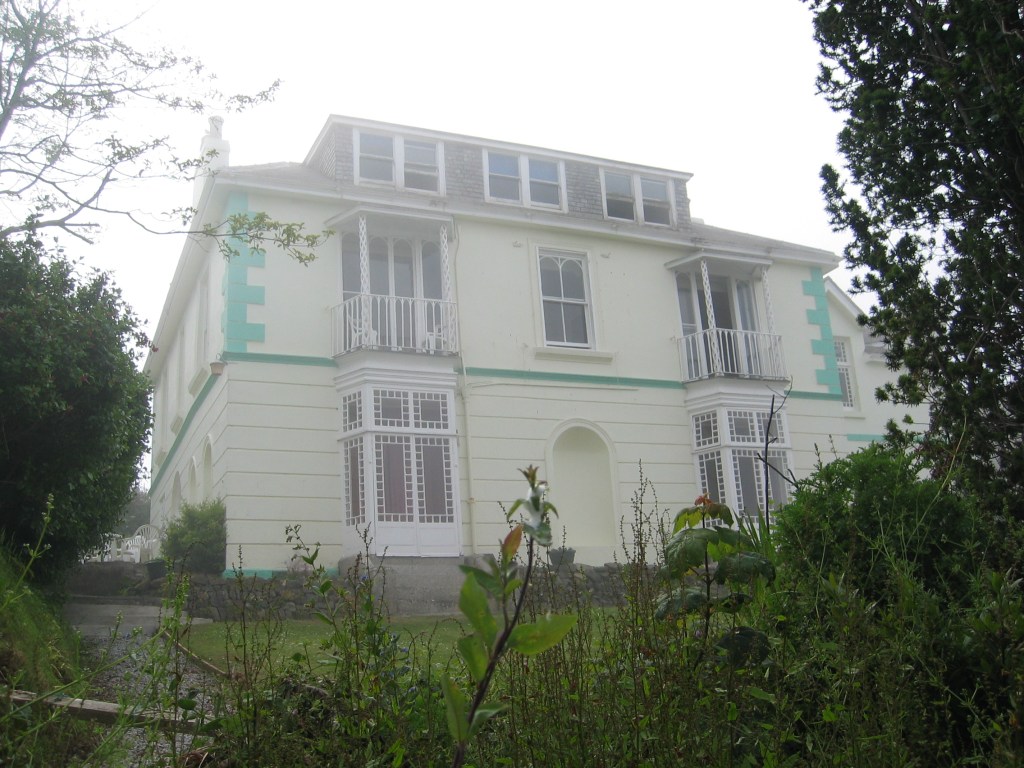
Turning my back on the view to look up at Talland House on a misty day in June of 2004.

Admirers of Virginia Woolf and protectors of her literary legacy are not giving up.

Yesterday, it seemed the legal cost of protecting the historic view of the Cornish coast and Godrevy Lighthouse from Talland House would prohibit any further action. Today, I share news from the Virginia Woolf Society of Great Britain that Polly Carter has set up a GoFundMe account to help protect that very view.

Carter, the National Trust certified gardener at Talland House in St. Ives, Cornwall, says that if the £1,400 target cannot be met, all donations will go toward creating a commemorative website with films and artworks celebrating the view for next year’s To the Lighthouse centenary events in St. Ives.

Launched on March 25, as of today the account has raised £701 — or 51 percent of its goal. Please support the effort and share it if you can by visiting the “Save the view from Virginia Woolf’s Talland House” GoFundMe campaign.

Why this new fundraising effort?

As Carter writes on the GoFundMe page:

“Unfortunately the development has just received permission from Cornwall Council to make amendments to a set of plans on a historical, 2009, planing permission. Legal advice that we took suggests that there is a legal challenge to how those amendments got attached to the permission.

If we were able to challenge this at judicial review, there is a chance that the developer would not want to build the original plans and be put off. It is not a sure way of stopping the development but this is currently our only way of impacting any change on being able to resist the view disappearing.

“This is my last attempt at raising the the funds that the campaign group need. I realise that raising that much that quickly is unlikely and if we don’t reach the target and are unable to go to judicial review, any funds that are donated will go towards commissioning a website with commemorative films and artworks of the view/centenary celebrations of To The Lighthouse next year in St Ives.”

A judicial review could halt or deter the development, but the cost of initiating it is £20,000, and funds must be raised by Monday, March 30.

Why save the view?

Talland House is important to Woolf’s legacy for several reasons. It was the setting and inspiration for her 1927 novel To the Lighthouse. It was also where Woolf and her family spent their summers  until her mother, Julia Stephen, died in 1895, when Woolf was 13.

The house and its surroundings attract hundreds of visitors each year, drawn by its significance in Woolf’s life and its central role in To the Lighthouse. “The view from the house and garden is an essential part of this heritage setting and deeply connected to Woolf’s personal history, her writing, and the development of Modernism,” according to Carter.

What is the history of the development project?

Plans to obstruct the view are not new. Earlier plans for the construction of $3 million worth of flats near Talland House in 2003 sparked protests from Woolfians around the world, and the project did not proceed. In 2009, developers submitted a new plan, but that did not move forward despite receiving planning permission.

When development plans were in the news again in 2015, Woolfians fought back against the six-flat version of the project that threatened the view of Godrevy. To someone across the pond, it seemed that the protests halted the development. But a March 28, 2026, email from Polly Carter explained why the project did not move forward.

“Just for clarification,” she wrote, “the 2015 planning permission for a different building didn’t get stopped. Cornwall Council  granted the permission, but it was never acted on by the developer and then they sold the plot, with the original planning permission from 2009, which was extant.”

Why can’t Talland House be protected?

It’s complicated. In 2015, a local resident forwarded Blogging Woolf an email from English Heritage detailing a provision that could shut down the project. It said current legislation included a provision to “avoid harm to the setting of a listed building if it contributes to the significance of the building.”

Talland House is listed and considered Grade II, which means it is “nationally important and of special interest.”  The St. Ives resident cited National Planning Framework Section 12 paras. 128,9,132 and shared that information on the St. Ives Council’s comments page for the proposed development.

Then — and now — I did not know if Talland House’s recognition as “nationally important and of special interest” helped halt the development project in 2015 — and could help it now — or not. But the email from Carter clarified the situation.

Carter wrote:

“It’s been particularly complicated due to the fact that the [current] application related to an already existing planning permission. The point made by English Heritage in 2015 would absolutely still stand if what we were dealing with was a new application.

“All the way through we having been trying to find a way to force a resubmission of the 2009 planning application so that we could object on the heritage grounds. Very sadly, this is impossible as it’s a fixed entity in law, and it’s just devastating that no one challenged the permission in 2009.”

Why is the view in jeopardy once more?

A screenshot of the planning document that shows the west and east elevations of the multi-story proposed development, which is called The Terrace St. Ives.

As described above, past efforts to block development plans that would obscure the view from Talland House resulted in temporary delays and the sale of the St. Ives property, but the original planning permission is still in place.

Now a new developer has taken up the project, made adjustments, and is moving forward under the permission granted in 2009. Cornwall Council recently approved amendments to the 2009 planning permission, and work has begun. This time, the new five-story development of 12 flats will likely give its residents a lovely view of the coast and the lighthouse, while completely blocking the view from Talland House.

This is the situation despite legal advice suggesting there may be grounds to challenge the process — and despite posted objections from St. Ives residents and others around the globe. UK media, including the BBCThe Telegraph, and St. Ives Local, have also covered this developing story.

Peter Eddy, owner of Talland House, was quoted in St. Ives Local as saying:

​​In 2022, Talland House was formally recognised as a significant heritage property in Cornwall and awarded a black plaque by the Cornwall Heritage Trust. As guardians of Talland House, we are committed to preserving both the fabric of the building and the unique landscape that inspired one of literature’s most iconic works. To compromise or lose the view that shaped Virginia Woolf’s creative imagination would be a travesty for the literary world and a profound loss to Cornwall’s cultural heritage.

Editor’s Note: This story was updated on March 28 to include clarifications from Polly Carter. 

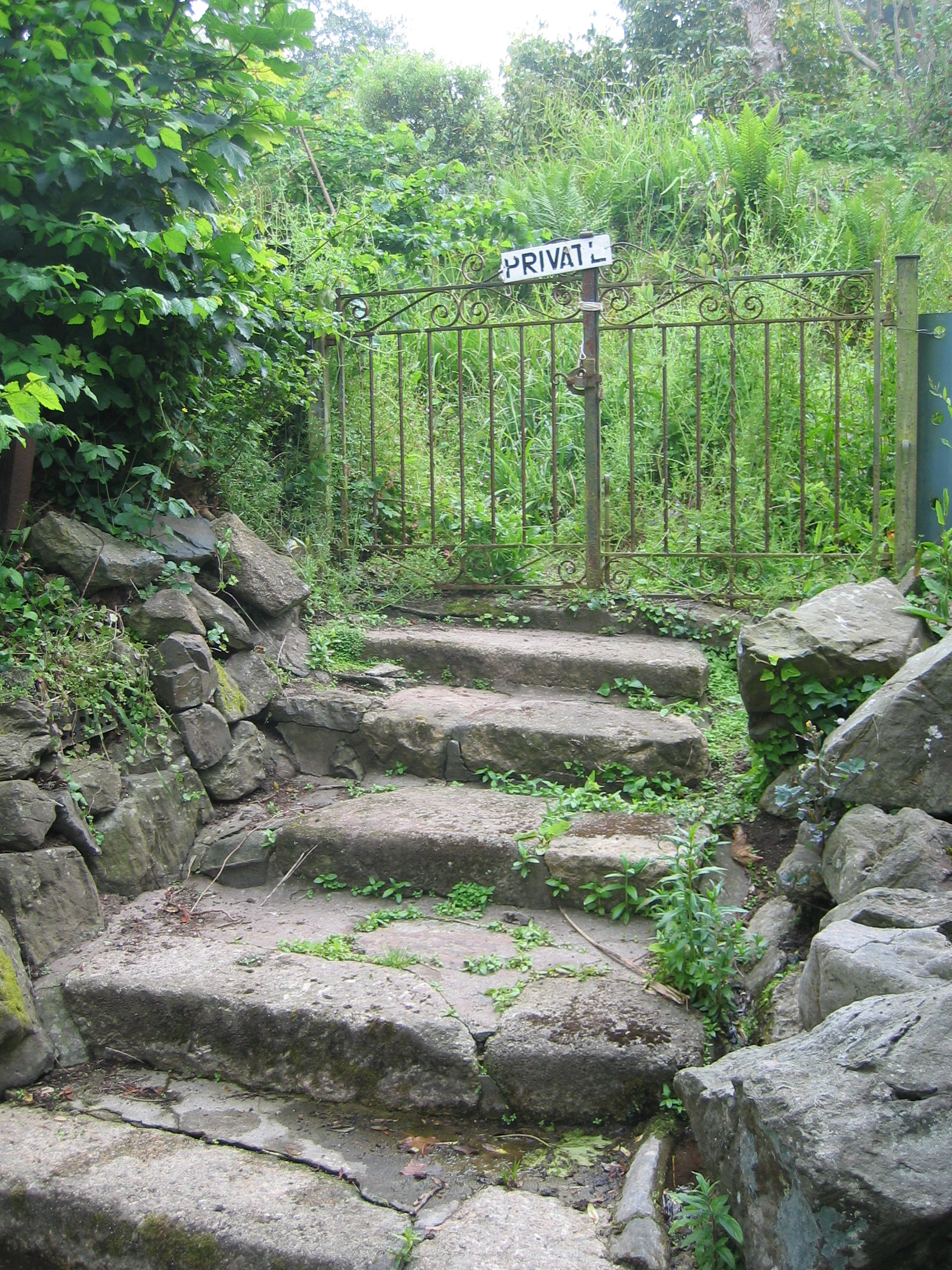
Polly Carter is restoring the Talland House garden now, but this was the view of a set of stone steps leading to a “Private” area of the garden in June of 2004.


Professor Maggie Humm, vice-chair of the Virginia Woolf Society of Great Britain, and Councillor Johnnie Wells, Deputy Mayor of St. Ives, at the Talland House plaque unveiling on Sept. 11, 2022. Photo: St. Ives September Festival
Read Full Post »

Godrevy Lighthouse

For years, Virginia Woolf readers and scholars around the globe have fought against development plans that threatened the view of the Cornwall coast and Godrevy Lighthouse from Talland House in St. Ives, Cornwall. Now, it seems, that popular and precious view will likely be lost forever.

The message below was contributed by Polly Carter, the National Trust certified gardener at Talland House, and circulated by the Virginia Woolf Society of Great Britain. It is the latest update on the opposition to the plans and includes a discussion of legal options, costs, and the path ahead.

Background

Talland House is important to Woolf’s legacy for several reasons. It was the setting and inspiration for her 1927 novel To the Lighthouse. It was also where Woolf and her family spent their summers  until her mother, Julia Stephen, died in 1895, when Woolf was 13.

As many of you will be aware, news broke in the new year that there was an application with Cornwall Council for amendments to a 2009 planning permission for a 5-storey block of 12 luxury apartments on a site in front of Talland house, which would block the famous view of the bay and lighthouse from Woolf’s formative childhood summer home in St Ives.

Professor Maggie Humm, vice-chair of the Virginia Woolf Society of Great Britain, and Councillor Johnnie Wells, Deputy Mayor of St. Ives at the Talland House plaque unveiling on Sept. 11, 2022. Photo: St. Ives September Festival

Because the application was for amendments to an existing planning permission we were unable to object on grounds of harm to the setting of a listed building, which according to accounts from St Ives Town Council and Cornwall Council, we would have been successful in doing. We still wanted to object to the application for amendments in the hope that the developer would not want to build to the original plans and put in new planning permission, which we could them object to on heritage grounds.

Because our grounds for objecting to the specificity of the amendments were so limited, we chose to bring in legal expertise. Sarah Clover, Barrister at The Kings Chambers, a top of her field expert in planning law. She found fault with Cornwall Council’s route to applying the amendments to the original planning permission. Cornwall Council objected to the points raised in our KC’s advice and granted the permission anyway.

Last week we met with KC Clover and planning law expert solicitor Brendon Lee and they both considered that we do have a legal challenge worth bringing to judicial review. This would mean employing them to create a case detailing the legal mistakes made by Cornwall Council, inviting Cornwall Council to defend themselves and seeing if a judge agrees that the case is worth bringing to court.

If they did, then we could fight it in court in the hope of winning, resulting in the quashing of the application for amendments. Our problem is that the chances of winning are unpredictable and costs could potentially accumulate to un-manageable amounts.

The financial risks

Estimated costs could include:

  • Initial legal preparation: £10,000–£20,000
  • Further legal work if the case progresses: £10,000–£30,000
  • Potential court costs if the case proceeds and is unsuccessful: £10,000–£30,000
    In total, costs could potentially reach £30,000–£80,000.

Because of these risks, it would likely require a named individual to act as the legal client, which also enables a lower cost capping threshold, rather than relying solely on a loosely organized fundraising effort, in case the fundraising cannot meet the demand.

A difficult decision

The group now faces a very narrow window of time. If a judicial review is to be pursued, legal preparations would need to begin within the next two weeks to meet the filing deadline. After this date, the option of judicial review is no longer available.

But the financial implications make this decision impossible without substantial and swift backing. Even if all the money could be found, the risk that it would still come to nothing at all, and even with a win that the original planning permission is still valid, it feels like too much to ask of anyone.

So, we have likely come to the end of the road for quashing the current application for amendments that the developer has asked for and received.

Looking forward

While the potential loss of the historic view from Talland House would be deeply disappointing to many who value its connection to Virginia Woolf, there is also growing interest in strengthening public engagement with the site itself.

Ideas being discussed include:

  • Developing visual arts related programming around Talland House
  • Increasing the garden tours and sharing the story of the meaningful planting being developed there
  • Setting up a Virginia Woolf themed Book Club in St Ives to connect local people to the significance of Woolf’s work and St Ives’ place within that
  • Building a broader network of supporters committed to protecting the cultural legacy of Talland House.
  • Exploring the possibility of a Virginia Woolf museum and gallery in St Ives
  • Curating To The Lighthouse centenary celebrations next year

Whatever the immediate outcome, the conversation has already highlighted how strongly many people feel about preserving the literary and historical significance of Talland House for future generations.

Thank-yous

Lots of work by lots of people has gone into the overall process so far, and despite it not being quite over yet I wanted to thank some key people who have been instrumental in getting us to this stage.

As the gardener at Talland house I am deeply connected to the place and have experienced first-hand how deeply moved people are by experiencing it and hearing its story which has urged me on. I’d like to thank:

  • Peter Eddy, the owner of Talland House, who has allowed these forms of engagement and supported the campaign opposing the development.
  • The residents of Talland house whose privacy I have tried to respect in this process, but who all care deeply about the place.
  • The Virginia Woolf Society of Great Britain, particularly Maggie Humm who has been beside me all the way in this process, Sarah Latham Philips, previously of the VWSGB Executive but is still supporting the campaign and my development within it,  Lynn Fox who helped put the case file together ahead of decision date and has been an encouraging support, the residents of Gallinus Point,  who were among those who contributed to the legal fees, Gemma Jerome, environmental planner who appeared miraculously at just the right time and has provided guidance and clarity, and a huge thank you to Sharon Bylenga who jumped to action on day one, new year’s eve and has given essential financial support and unwavering guidance to and confidence in me and the team.
  • And finally, everyone who lodged an objection in the planning portal or wrote to the Council/MP’s.

For answers to any questions or to add offers for further support, please write to pollycartergardener@icloud.com, and follow @Tallandhouse on Instagram for future updates.

Read Full Post »

Blogging Woolf was part of a pilgrimage to Talland House in 2004. This photo depicts the front right corner of the home.

In mid-January, we reported on the most recent plan to construct a multi-million dollar flat project that would obstruct the view of the Cornwall coast and Godrevy Lighthouse from Talland House in St. Ives, Cornwall, the setting and inspiration for Virginia Woolf’s 1927 novel To the Lighthouse. We are sad to report that the plan is moving ahead, according to the Virginia Woolf Society of Great Britain.

Below is the text of a March 13 message sent by the Virginia Woolf Society of Great Britain, which helped lead the resistance effort.

Talland House planning update

”It is with regret that we report the decision of the Planning Committee of Cornwall Council this week to allow the planning application for a building in front of Talland
House in St Ives to go ahead.

“There were over 130 objections to the plan, including a handwritten letter from our President Dame Eileen Atkins. The Talland House Group, including the VWSGB and led by Polly Carter, the heritage gardener at Talland House, employed a KC who raised a legal challenge to the lawfulness of the application.

“The particular points brought by our Counsel remain unaddressed by Cornwall

Godrevy Lighthouse in St. Ives, Cornwall

Council’s legal department. They responded, but not to the points raised. Sadly, the developer can go ahead and build what will irrevocably destroy the To the Lighthouse view. BBC Cornwall supported our campaign.

“We are considering opening this up to judicial review and are exploring other options. The Talland House Group is to be formalised, and may have a website and events that celebrate the view and its importance to Virginia Woolf and her works.

“Time will be needed to re-focus our strategy, but we hope to issue more guidance as to how you can further support the campaign and all that Talland House stands for.

“Our thanks to everyone who contributed to the campaign against this development, and we will keep you updated. This story may not be over yet!”


Read Full Post »

Godrevy Lighthouse © Blogging Woolf

Today is the last day to post a comment objecting to the planned development of a multi-million dollar flat project that would obstruct the view of the Cornwall coast and Godrevy Lighthouse from Talland House in St. Ives, Cornwall, the setting and inspiration for Virginia Woolf’s 1927 novel To the Lighthouse.

Please add your objection to the more than 100 already posted, as of Tuesday.

Read more about the project here.

How to register and post your objection

You must register for an account on the Cornwall Council website before you can post a comment objecting to the development.

If you live in the UK, registration is not a problem, as you need a UK address to register.

If you don’t live in the UK, don’t let the fact that you must have a UK address stop you. Just use the Talland House address provided by Maggie Humm: Albert Road St Ives TR26 2EH. You can register for an account at this link. When the site asks you to verify your account by either text or email, choose email. They will only verify by text if you have a UK phone number.

I used the Talland House address and had no problem, once I realized that the site’s pages load very slowly. Be prepared for that and be patient.

Once you register and are signed in, you can post your comment objecting to the proposal by searching for PA25/07750.

Tuesday, the BBC published a story on the proposed project and its destruction of the view: “Flats to block sea view made famous by Woolf novel.” In that story, Talland House owner Pete Eddy said:

The value to this view is the history behind it: it’s Virginia Woolf, it’s St Ives, it’s Cornwall, it’s literature; it’s everything to do with that book.

What’s next?

The development proposal will be discussed at a planning meeting at St Ives Town Council tomorrow, Thursday. The local authority is set to deliver a decision by Feb. 6.

Map of the proposed development that would obstruct the view of the coast from Talland House in St. Ives, Cornwall. Talland House is to the left and below the development area, which is outlined in red.

You can see how high this project will be by looking at a screenshot of the planning document that shows the west and east elevations of the proposed development, which is called The Terrace St. Ives.

Read Full Post »

The Sea Blazed Gold is Louisa Albani’s latest illustrated pamphlet featuring Virginia Woolf, and its publication coincided with the Sept. 11 unveiling of the plaque at Talland House that commemorates Woolf’s connection with the seaside town of St. Ives in Cornwall.

Talland House was Woolf’s summertime home in St. Ives from 1882-1894. Her father, Leslie Stephen, had the lease on Talland House from 1878-1895.

Third featuring Woolf

The Sea Blazed Gold is the third of Albani’s pamphlets to feature Woolf. The first, A Moment In The Life Of Virginia Woolf, explored how the author created her vivid seascapes while living in Tavistock Square in London. The second, The Journey to my Sister’s House, focused on her time in the South Downs, where her sister Vanessa Bell lived.

The Sea Blazed Gold takes its title from a passage in Woolf’s 1931 novel The Waves. In it, Albani weaves her artwork with excerpts from Woolf’s diaries, letters and novels to celebrate Woolf’s time in St. Ives and its impact on her life.

The artist uses mixed media, including collage, metallic stitching and pen and ink in the 36-page publication printed on her own press.Text contributors include Maggie Humm, one of the leaders of the campaign for the Talland House plaque, and writer Astra Bloom.

Purchase and shipping details

The cost of The Sea Blazed Gold is £13. Albani’s press, Night Bird Press, limits its shipment of pamphlets to within the UK. For overseas shipping, contact Nash Robbins at Much Ado Books: shop@muchadobooks.com

Read more on the topic in the October/November issue of My Cornwall.

Read Full Post »

Older Posts »