Feeds:
Posts
Comments

Archive for October, 2025

In the 18 years that Blogging Woolf has been in existence, few things Woolfian have excited me more than writing a chapter about this blog for The Edinburgh Companion to Virginia Woolf and Transnational Perspectives.

It was three years ago that Elisa Bolchi emailed me to ask if I would contribute a chapter to the project originally dubbed “Worldwide Woolf.” I was surprised. I was honored. I was ecstatic. And of course I quickly emailed a “Yes.”

Now this follow-up to The Edinburgh Companion to Virginia Woolf and Contemporary Global Literature (2021), edited by Jeanne Dubino, Paulina Pajak and Catherine W. Hollis, is out. So I am here to tell you more about this volume and its wonderful editing by Bolchi, Maria Rita Drumond Viana, Alice Davis Keane, Monica Latham, Sayaka Okumura, and Mine Özyurt Kılıç.

About the book

Besides a general introduction, Virginia Woolf and Transnational Perspectives kicks off with a special foreward — the republishing of Brenda Silver’s essay “World Wide Woolf,” in print for the first time.

The volume’s 31 chapters are divided into three sections that analyze the cultural mediation that has shaped how readers and viewers worldwide encounter Woolf’s images and works today.

The three sections: 

  1. Producing Woolf: Editing, Translating, Publishing
  2. Thinking through Woolf: Legacy and Contemporary Influence
  3. New Woolf, New Critical Perspectives

Research areas covered: rewriting, translation, dance, photography, fashion, contemporary art, digital humanities and drama

Areas represented by its writers: five continents including Africa, Asia, Europe, North and South America and 14 regions, including the U.S., Brazil, France, Italy, Turkey, Germany, the UK, Spain, Lithuania, Egypt, Israel, Japan, China and the Philippines.

More details

Pages: 488
Illustrations: 33 black and white

How to buy it

It is available at Edinburgh University Press. At $195 for a hardback or digital copy, the volume is pricey — as are most academic publications — so urge your institution’s library to purchase a copy. However, EUP offers a launch discount of 30 percent with the code NEW30 at checkout. I cannot guarantee the code is still viable, but it is worth a try.

About my chapter

My chapter, “Woolf on the World Wide Web: Creating a Community of Common and Scholarly Readers through Blogging Woolf,” is Chapter 31, the last in the volume. In it, I build on Silver’s insights as I explore the history of the blog, including its editorial content and its readership.

I also discuss its ability to foster collaboration among Woolf scholars and readers, as well as online and personal relationships.

Read Full Post »

I had not thought much about Virginia Woolf and Simone deBeauvoir’s life writing until I decided to write a paper connecting their wartime diaries with those of writer Iris Origo.

I delivered my work, “Writing ‘as the mood comes’: Diaries as Dissident Feminist Practice During World War II for Virginia Woolf, Iris Origo, and Simone de Beauvoir” at the 34th Annual International Virginia Woolf Conference in England in June.

How serendipitous, then, that the Virginia Woolf Society of Turkey is presenting a free program connecting the two on Oct. 24 at 7 p.m. Turkey time or noon EST as part of the society’s new season of Woolf Seminars.

The talk by Luca Pinelli, is titled “Virginia Woolf, Simone de Beauvoir, and the Materiality of Life/Writing” and will take place on Zoom.

The presentation will explore the compelling intersections between Woolf and de Beauvoir, examining how both writers engage with the tangible, embodied experience of life in their biographies, diaries, letters, and memoirs.

The talk proposes that their work transcends literary categories to interrogate the very texture of existence as perceived by human and occasionally nonhuman subjects.

You can register online. But hurry. Participation is limited to 100 slots.

Read Full Post »

Publication of Virginia Woolf’s newly discovered work of fiction, The Life of Violet, continues to create a stir.

Just published Oct. 7, the volume of short stories edited by Urmila Seshagiri was featured by PBS Newshour on its art and culture series Canva on Oct. 9.

And next week, The Center for Fiction will welcome Seshagiri for a conversation with Woolf scholar Anne Fernald on the book, which is considered Woolf’s first work of experimental fiction.

The talk is available in person or as a livestream on Thursday, Oct. 16 at 7 p.m. EDT.

If you live in or near New York City, you may want to head over to 115 Lafayette St. in Brooklyn to attend in person at a cost of $10. If not, register for the livestream; it’s just $5.

Registration and details for both are available online.

Anne Fernald

Urmila Seshagiri

Read Full Post »

I don’t always watch the evening news, but when I do, I watch PBS Newshour. I watched yesterday, and I am glad I did. Why? Because they included a feature on The Life of Violet, edited by Urmila Seshagiri, which I wrote about Tuesday.

The segment is part of their art and culture series, Canvas, and includes an interview with Seshagiri. It also takes us to Longleat House in Wiltshire, England, where Seshagiri discovered the typescript in the archives.

The good news is that you, too, can watch the segment about this newly discovered collection of three short stories by Virginia Woolf when she was just 25 years old.  It is available online.

Read Full Post »

The Life of Violet, edited by Urmila Seshagiri and just out today from Princeton University Press, is the newly discovered revised typescript of three early short stories by Virginia Woolf based on the life of her friend and mentor Violet Dickinson.

Witty, whimsical, lighthearted, and just plain fun, the book is an important discovery that I hope helps dispel the myth that Virginia Woolf was a sad, humorless writer beset by depression and suicidal thoughts.

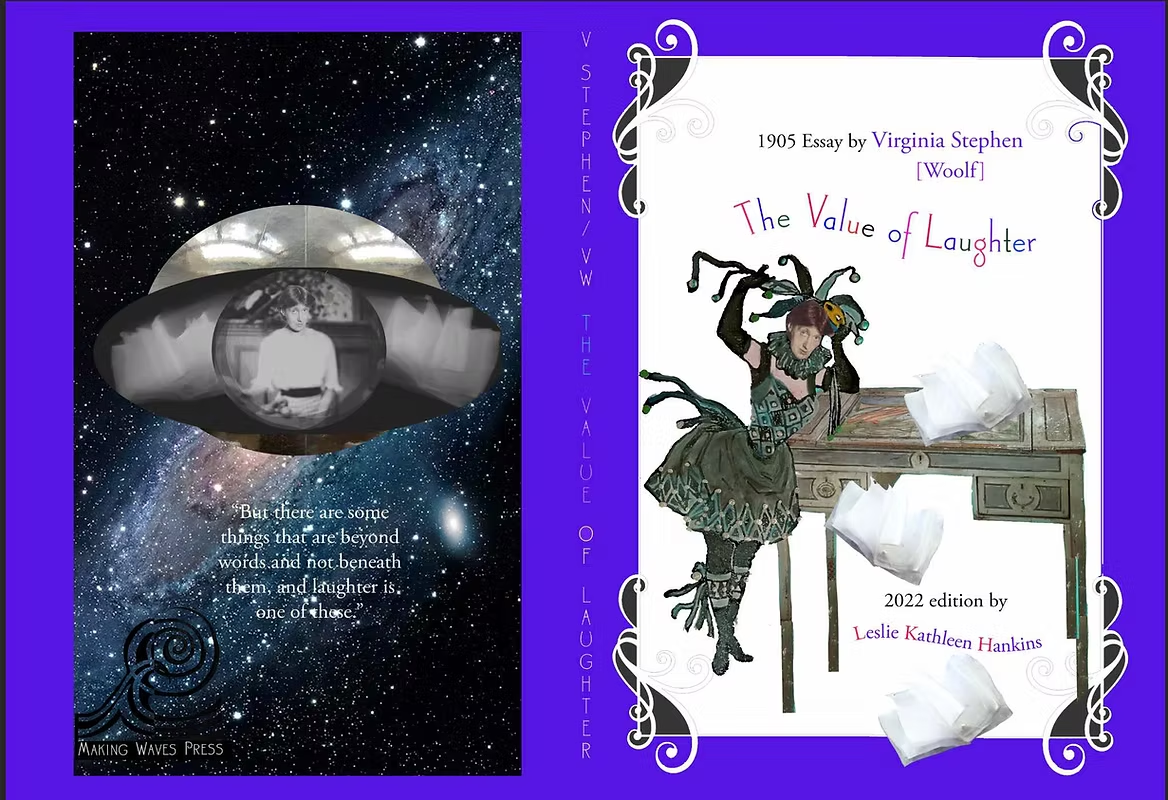
It should be no surprise that Woolf’s humor is often overlooked. That is often the case, and something Woolf recognized in her 1905 essay, “The Value of Laughter,” which was originally published in The Guardian.

Humour, we have been told, is denied to women. They may be tragic, or comic, but the particular blend which makes a humorist is to be found only in men.

Its history

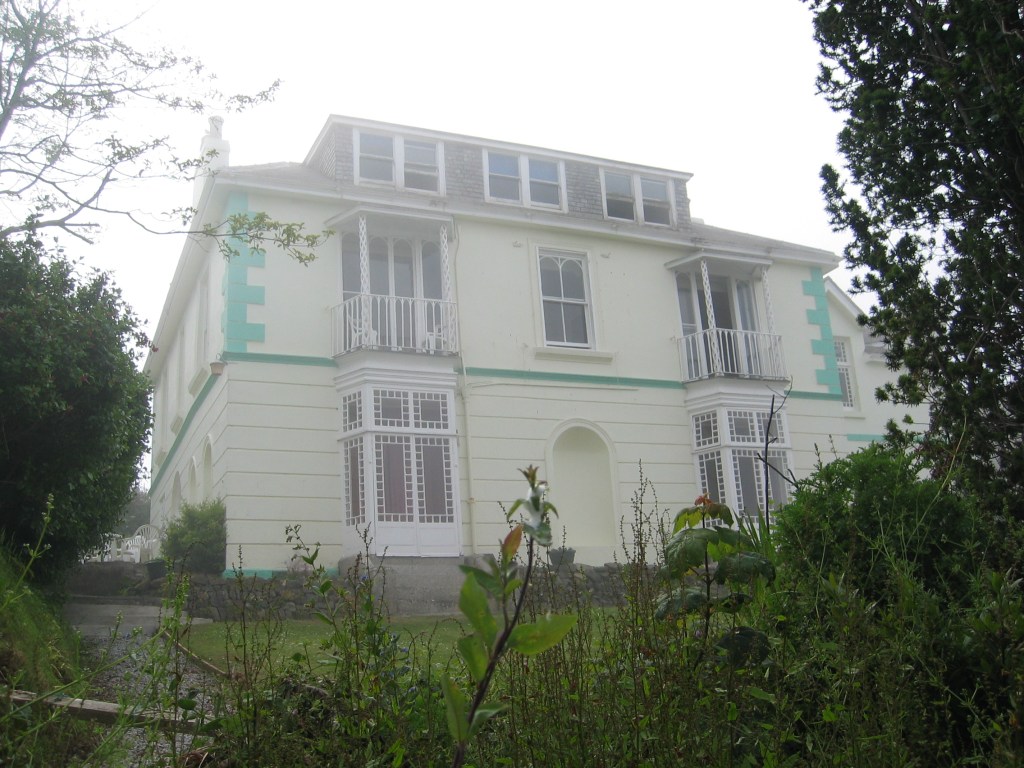
Woolf drafted the three comic stories that make up The Life of Violet in 1907, at the age of 25. Before leaving to spend several weeks in Playden, Sussex, just north of Rye, she sent Dickinson the draft she had “very hastily polished off” (A Passionate Apprentice, 367).

That version, typed in violet ink and titled “Friendships Gallery,” is housed today in the Berg Collection at the New York Public Library. Until lately, it was considered the only version in existence.

But in 2022, Seshagiri discovered a professionally typed revision—with corrections Woolf made by hand in 1908—at Longleat House in Wiltshire, England, after learning about its existence via email several years earlier. It had sat in the Longleat House archives for 80 years, after disappearing into the collection of Dickinson’s papers.

About the book

The Life of Violet is a three-part mock biography of Mary Violet Dickinson (1865-1948). It uses three whimsical, comic, interrelated stories—”Friendships Gallery,” “The Magic Garden,” and “A Story to Make You Sleep” to relate Dickinson’s fanciful life as a giantess (the real Violet was six feet two) who defies the societal norms of English life.

She has a full social life without marrying and inspires others to “have a fire” of creativity within them (12). She lives in a cottage of her own that “was the beginning of the great revolution which is making England a very different place from what it was” (24). And she becomes a giant sacred heroic princess, who brings “[a]ll the most delightful things you can think of” (35) to a Japanese village, which she saves from monsters by laughing and waving her umbrella.

Foreshadowing

The Life of Violet also foreshadows literary things to come from Woolf. As a mock biography, it is a harbinger of Orlando (1928). With its focus on Violet’s cottage of her own in “The Magic Garden,” we see the original stirrings of ideas leading to A Room of One’s Own (1929). But most of all, its overall use of language, its wit, its whimsey, and its feminist thought, both sound and feel like Woolf.

A quote from Anne Fernald, editor of Mrs. Dalloway: A Norton Critical Edition, speaks to The Life of Violet’s thematic importance:

The stories are lighthearted, but in them we see how, as early as 1907, Woolf was concerned with the major themes of her career: the need for a room of one’s own, the value of an ordinary woman’s life, and the imperative to remake the way fiction is written.

In this new volume, Seshagiri stays true to Woolf. She incorporates Woolf’s handwritten edits, which incorporates edits suggested by Dickinson. And she reproduces the page layout, language, spacing, and spelling of Woolf’s revised transcript.

The extras

By including detailed “Explanatory Notes,” she also makes it easy for readers who may not be familiar with Woolf or the social and historical context of her time.

The volume also includes a preface, an afterword that provides a detailed explanation of the history of these early short stories, as well as photographs.

Read Full Post »