Feeds:
Posts
Comments

Archive for the ‘Woolf online’ Category

Join Woolf Salon No. 28: “Reading the Russians” on Friday, July 26, 2-4 p.m. EST.

Hosts: Georgy Liseyev and the Salon Conspirators
Date: Friday, July 26
Time: 2–4 p.m. EST (New York) / 11 a.m.–1 p.m. PDT (Los Angeles) / 3–5 p.m. Brasilia / 7–9 p.m. BST (London) / 8–10 p.m. CEST (Paris) / 9–11 p.m. Ankara / Sat 3 a.m.–5 a.m. JST (Tokyo) / Sat 4 a.m.–6 a.m. AEST (Sydney). Please double check time zone conversions.
Where: On Zoom
How: Contact woolfsalonproject@gmail.com to sign up for the email list and receive the Zoom link.

The readings

The group looks forward to discussing two of Woolf’s many essays on Russian literature with you: “The Russian Point of View” and “The Novels of Turgenev”! Georgy will also share some translations that he’s been working on.

Read “The Russian Point of View” (1925) and “The Novels of Turgenev” (1933). You can find “The Russian Point of View” in Essays (vol. 4) and The Common Reader: First Series (1925). “The Novels of Turgenev” appears in Essays (vol. 6) and The Captain’s Death Bed and Other Essays (1950).

Please let the Salon Conspirators know if you have trouble accessing these texts. (Please note: the version of “The Novels of Turgenev” that appears on The Yale Review website differs substantially from the version noted above; The Yale Review version is included in an Appendix to Essays [vol. 6].)

Read more about “Woolf, Chekhov and the Russian Point of View.”

How to join the Salon

Anyone can join the group, which meets via Zoom and focuses on a single topic or text. Just contact woolfsalonproject@gmail.com to sign up for the email list and receive the Zoom link.

Background on the Salon

The Salon Conspirators — Benjamin Hagen, Shilo McGiff, Amy Smith, and Drew Shannon — began the Woolf Salon Project in July 2020 to provide opportunities for conversation and conviviality among Woolf-interested scholars, students, and common readers during and beyond the COVID-19 pandemic.

The last Woolf Salon No. 27: “Virginia Woolf Miscellany at 100” was held on Zoom on Friday, May 10.

Read Full Post »

A new digital resource is now available for readers and scholars interested in Virginia Woolf. WoolfNotes.com, a project that digitizes her reading and research notes, is now live on the King’s College, London website.

This major digital humanities project brings into the public domain Woolf’s last remaining substantial unpublished work.

Brenda Silver and Michele Barrett have been collaborating on the project since 2016. Their aim was to make the notebooks  freely accessible through high-quality digital images, in order to demonstrate the range of Woolf’s scholarship and reading.

What you will find

The core of the project is the 67 reading notebooks that Silver researched and described in detail in her original 1983 book published by Princeton University Press, Virginia Woolf’s Reading Notebooks, which was digitized in 2017 and made available online for free.

The website provides high quality images of Virginia Woolf’s lifetime reading and research notes.  It shows how her writing, both fiction and non-fiction, was indebted to extensive and rigorous research on social, historical, economic, political and imperial issues. It also shows the depth of her formal and informal education.

The project includes background information that should help readers put Woolf’s notes in context. The digital images of Woolf’s Reading Notebooks is paired with Silver’s explanations from her 1983 book.

The physical notebooks are housed at three different sites, making it challenging for scholars to access them — until now. Thirty-three of Woolf’s Reading Notebooks  are archived at the New York Public Library Berg Collection, 33 at The Keep in Sussex, and one at the Beinecke Library, Yale.

Providing digital images of all 67 online — and for free — makes them easily accessible to Woolf scholars and readers worldwide.

The WoolfNotes site also includes digital images of Note Cards that Woolf made for various projects.

Background of the project

The WoolfNotes project started in 2016 as a collaboration between two Woolf scholars, Michèle Barrett and Brenda Silver, with the idea of juxtaposing the notebook manuscripts with Silver’s 1983 guide to their contents.

The technical director, Gilly Furse of Osprey Websites, has played an important role in bringing the project to fruition online. The team now includes Clara Jones, who will move the project forward.  Others who have provided assistance include Nadia Atia, Catherine Lee and Victoria Walker.

Read Full Post »

Join Woolf Salon No. 27: “Virginia Woolf Miscellany at 100″ on Zoom on Friday, May 10, from 2-4 p.m. EDT (New York).

The Miscellany is the semi-annual publication of the International Virginia Woolf Society.

The session will include a rich discussion (and celebration) of the Virginia Woolf Miscellany, which celebrated the major benchmark of its 100th issue last year. The discussion will include future and past editors of the publication, along with readers and newcomers.

The details

Event: Woolf Salon No. 27: “Virginia Woolf Miscellany at 100″
Hosts:
Vara Neverow and Salon Conspirators
Date: Friday, May 10
Time: 2–4 p.m. EDT (New York) / 11 a.m.–1 p.m. PDT (Los Angeles) / 3–5 p.m. Brasilia / 7–9 p.m. BST (London) / 8–10 p.m. CEST (Paris) / 9 –11 p.m. Ankara / Sat 3–5 a.m. JST (Tokyo) / Sat 4 –6 a.m. AEST (Sydney)
Where: On Zoom
How: Contact woolfsalonproject@gmail.com to sign up for the email list and receive the Zoom link.

The readings

Organizers ask that folks read through issues 1 and 5 of the VWM, peruse the online archive as time allows, and come in with a favorite issue or cluster that has been meaningful to them, their scholarship, or their teaching. (Issue 101 is now available online.)

Homework: Read Issue 1 and Issue 5 and peruse the online archive as you have time.

We look forward to seeing many of you on the 10th and to celebrating the rich history of the VWM!

Future Salon planned

  • Friday, July 26, at 2 p.m. ET – Woolf Salon No. 28: TBA

The last Woolf Salon, Woolf Salon No. 26: Faces and Voices, was held Feb. 23.

Background on the Salon

The Salon Conspirators — Benjamin Hagen, Shilo McGiff, Amy Smith, and Drew Shannon — began the Woolf Salon Project in July 2020 to provide opportunities for conversation and conviviality among Woolf-interested scholars, students, and common readers during and beyond the COVID-19 pandemic.

Read Full Post »

Literature Cambridge’s fourth Woolf Season: Woolf and Freedom is in progress. It includes a live online lecture and seminar every month until June.

Times below are in Greenwich Mean Time (GMT) through February and British Summer Time (BST) March through June. Course fees range from £27-£32. All prices include VAT at 20 percent.

At the 2019 Literature Cambridge course “Virginia Woolf and Gardens,” Kabe Wilson talked about his art project in which he cut out the words from Woolf’s “A Room of One’s Own” to create his novella’s 145 pages.

Remaining sessions

• Saturday 6 January, 6 p.m. Lecture 5. To the Lighthouse (1927), Art and the Freedom of Movement, with Kabe Wilson.

• Sunday 4 February, 6 p.m. Lecture 6. A Room of One’s Own (1929): Intelligence and Intellectual Freedom, with Natasha Periyan.

• Saturday 23 March, 6 p.m. Lecture 7. Shakespeare’s Sister and Creative Freedom in A Room of One’s Own (1929), with Varsha Panjwani.

• Saturday 6 April, 6 p.m. Lecture 8. Freedom of Thought in Woolf’s Essays, with Beth Rigel Daugherty.

• Saturday 4 May, 6 p.m. Lecture 9. Freedom of The Waves (1931), with Angela Harris.

• Saturday 8 June, 6 p.m. Lecture 10. ‘The Essence of Freedom’ in Three Guineas (1938), with Claire Davison.

Members of the Virginia Woolf Society of Great Britain may book any Woolf session at the student price.

King’s College, Cambridge

Read Full Post »

Scholar Elisa Kay Sparks is known for her interest in flowers. Specifically, Virginia Woolf and flowers. She can usually be counted on to present a paper on that topic at annual Woolf conferences. And she has an amazing blog dedicated to the topic.

A Virginia Woolf Herbarium by Elisa Kay Sparks

Flowers from one to 99

A Virginia Woolf Herbarium describes itself as “a collection of essays on flowers in the work of Virginia Woolf: fiction, essays, and life-writing.” Each of the site’s 99 essays includes photos of the flower it discusses.

Each flower discussed on the site is referred to at least once in Woolf’s fiction and/or essays. They range from the almond blossom, mentioned only twice in Woolf’s fiction, to red-hot pokers, which appear 13 times.

Counting, researching, and accounting for the flowers

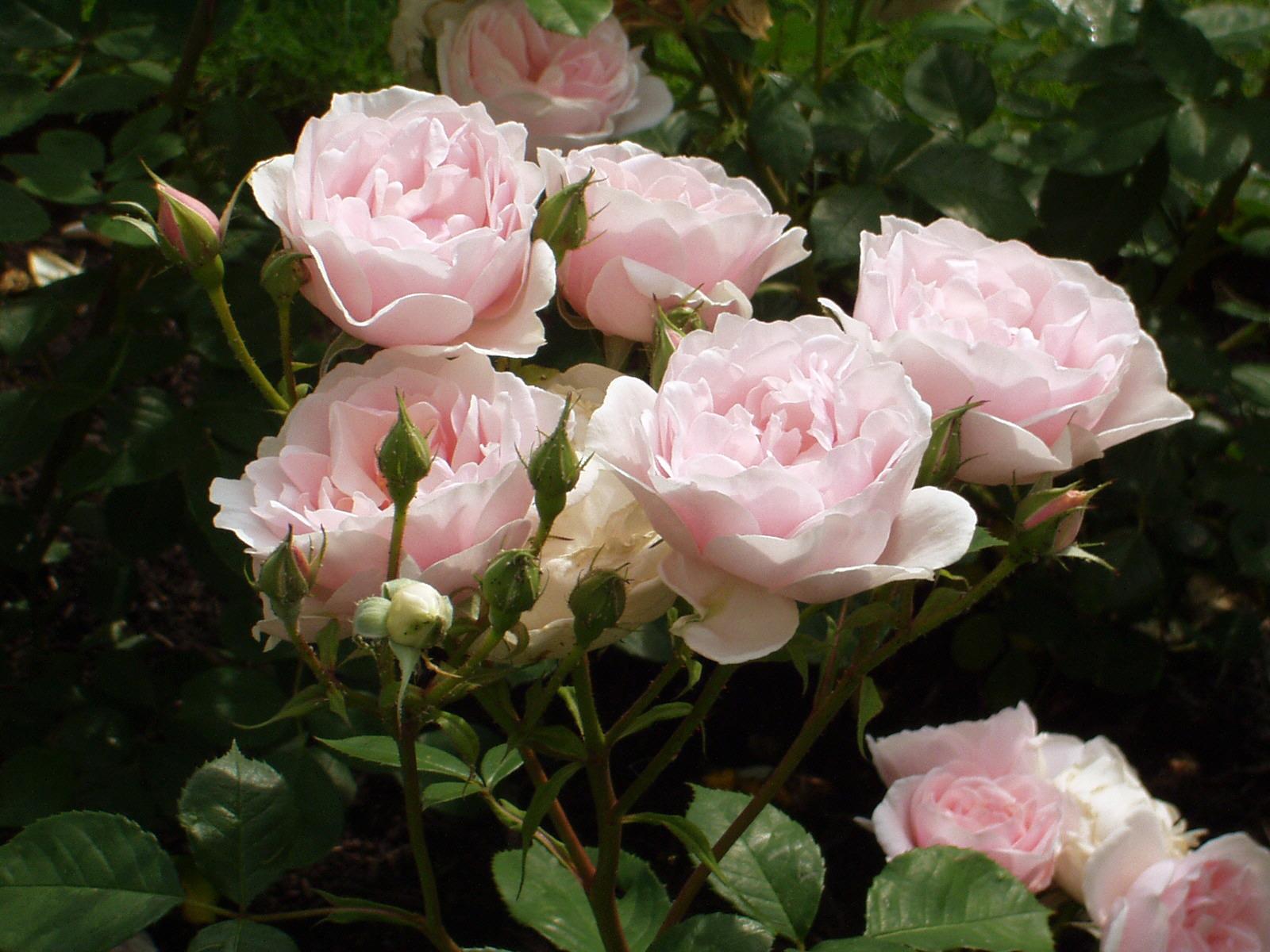
Pale pink roses in the garden of St. Paul’s Cathedral, London. Similar roses frame the doorway of Virginia’s bedroom at Monk’s House.

In fact, Sparks, always meticulous in her research, includes a Flower Count that lists the flowers alphabetically and names the number of times Woolf included it in her writing. For example, Woolf mentions roses more often than any other flower — 250 times, with 162 of those occurring in her fiction.

Sparks breaks the count down into four categories: fiction, essays, diaries and letters, and digital hits.

The chart also includes flower purchases Leonard Woolf mentions in his garden account book. From 1919 to 1950, he kept an exact account of all monies spent on and earned by the garden. From 1920 to 1927, he also kept a separate garden diary. These two small green cloth books with red bindings can be found in the Leonard Woolf Papers in the University of Sussex Library.

In the process of researching Woolf’s use of flowers in her writing, Sparks collected:

  • information on the literary, medicinal, and mythological meanings of flowers;
  • research on the history of gardens and gardening; and
  • research on the social assumptions and practices involving flowers and gardening.

Eventually, she plans to distill all of the information she has collected into a book.

More about Woolf and gardens

Virginia Woolf’s Garden: The Story of the Garden at Monk’s House by Caroline Zoob (2013)

The site also includes pages for Works Cited and an annotated list of the reference works Sparks consulted while doing her work on Woolf and flowers, work I would describe as both comprehensive and ground-breaking.

Caroline Zoob’s book, Virginia Woolf’s Garden: The Story of the Garden at Monk’s House, published in 2013, gives an up-close view of the Woolf’s garden. Cecil Woolf, Leonard’s late nephew, wrote the book’s Foreward.

Literature Cambridge also ran a one-week course on Virginia Woolf’s Gardens in July 2019. Blogging Woolf attended and published daily posts.

Garden at Monk’s House, Sussex home of Virginia and Leonard Woolf

Garden at Charleston, Sussex home of Woolf’s sister Vanessa Bell, Duncan Grant, and Clive Bell.


Read Full Post »

« Newer Posts - Older Posts »