Four $1,000 Orlando Prizes for Creative Nonfiction, Short Fiction, Poetry, and Sudden Fiction will be awarded.
The competition is open to women of all nationalities. All applications must be written in English and submitted online. Winners will be announced April 15.
Since its beginning, A Room Of Her Own Foundation has expended $603,204 on behalf of creative women through its $50,000 Gift of Freedom awards, scholarships, retreats, day conferences, public readings, the AROHO Book Club, and its customized Web-based resource center.
AROHO has hosted more than 250 women writers at retreats that feature a world-class faculty, and has sponsored approximately $50,000 in scholarships for women writers to attend its retreats as well as other intensive writing programs.
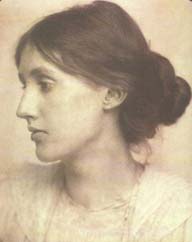
Virginia Woolf will be among 61 writers whose portraits will be part of a National Portrait Gallery exhibit that will tour England, beginning this spring.
The exhibit, called “Writers of Influence: Shakespeare to J.K. Rowling,” will open in Sheffield in April, and will travel to Southampton, Plymouth and Sunderland.
Museums Sheffield: Graves Gallery from April 17, a move that is generating controversy because it comes right after officials voted to shut down a city library
Southampton City Art Gallery from July 23
Plymouth City Museum and Art Gallery from Oct. 16
Sunderland Museum and Winter Gardens from Jan. 29, 2011.
Other writers whose portraits are included in the exhibit include William Shakespeare, Geoffrey Chaucer, Charles Dickens, Oscar Wilde, George Orwell, Enid Blyton, Lewis Carroll, Agatha Christie, John Lennon, JK Rowling, Poet Laureate Carol Ann Duffy, punk pioneer Lydon aka Johnny Rotten, David Bowie, Jarvis Cocker, Morrissey, Winehouse and recent Brit Award winner Dizzee Rascal.
As a side note, Woolf’s photographic portrait by George Charles Beresford is among the top 20 best selling post cards sold at the National Portrait Gallery.
Write quickly. You have less than a week to submit your piece on “Woolf and the Natural World” for the Fall 2010 issue of the Virginia Woolf Miscellany.
The Miscellany is seeking articles examining the natural world–gardens, landscapes, animals, ecology, etc.–in Woolf’s life and writing. Articles addressing teaching Woolf and nature are also welcome.
According to the Miscellany’s Web site, the publication was founded by Dr. J. J. Wilson, now emerita professor of English at Sonoma State University in California. The first issue was published in fall 1973. The publication now resides at Southern Connecticut State University.
When I first read about Woolf in Winter, I planned to reread all four novels and participate in all the discussions. I regret that I have failed in my mission.
If you are in the same predicament, links to the online discussions we missed are below.
But please note that we still have a chance to redeem ourselves — albeit with one of the most challenging of Virginia Woolf’s novels, The Waves. The online discussion begins a week from today, on Friday, Feb. 23. You can join Clare and other Woolf readers at Kiss a Cloud.
I plan to put Simone de Beauvoir’s The Mandarins aside for the moment and ride The Waves for the next week. Won’t you join us?
The European Journal of English Studies has issued a call for papers on the topic of contemporary gender resistance to be published in volume 16.
Guest editors for the special issue, which will be published by Routledge in 2012, are Eugenia Sifaki and Angeliki Spiropoulou.
Background Information: Socio-historical developments that have characterised the turn of the present century, such as increasing globalisation, migration and transnationalism, new technologies, the growth of the beauty industry and the medicalisation of the body, as well as various initiatives in equality and human rights legislation, have ushered in new conditions of experiencing and thinking subjectivity.
This issue seeks to interrogate the new experiences and conceptualisations of gender and sexualities that have been part of these transformations. Specifically, notwithstanding the assimilation of traditional feminist demands in official cultural discourses, what new forms of resistance to conventional gender discourses, categories and practices, and inversely, what novel manifestations of resilient gender asymmetries have emerged in this allegedly ‘post-feminist’ era?
The editors invite contributions that address the modes in which contemporary Anglophone literary, visual and popular culture refract and respond to the question of gender and sexualities today.
Themes that could be addressed include, but are not restricted to:
novel gender formations and experiences in contemporary Anglophone literature and culture
gender and genre
the response of contemporary women writers to the gender conditions of the 21st century
gender and racial, ethnic and religious minorities, transnational communities and diasporas
new ways of performing gender gender
sexualities and the law
reproduction and new reproductive technologies
reconfigurations of gendered private and public spaces
developments in theories of gender and sexuality
Proposals: Detailed proposals (1,000-1,500 words) for articles of c. 5-6,000 words, as well as all inquiries regarding this issue, should be sent to both guest editors: Eugenia Sifaki at evsifaki@gmail.com and Angeliki Spiropoulou at aspirop@uop.gr.
Deadlines: The deadline for proposals is 15 September 2010, with delivery of completed essays by 31 March 2011. The issue will appear in 2012.