Feeds:
Posts
Comments

If you are a regular reader of Blogging Woolf, you may have noticed that I have not posted as regularly as usual for the past year or so. I blame the pandemic.

Poster for The Woolf Salon No. 7, “A Room of Your Own Will Not Protect You: Woolf and the Second Wave Feminists”

It has shortened my attention span, sapped my motivation, stifled my creativity, and generally made it difficult for me to focus for very long on anything seemingly unessential for survival.

You may have experienced similar feelings. Or not.

Pandemic-prompted Salon

Luckily, for a number of energetic Virginia Woolf readers and scholars, the pandemic has prompted the creation of something new and innovative for Woolf lovers around the globe, The Woolf Salon.

Ben Hagen, Shilo McGiff, Amy Smith, and Drew Shannon began the project last July. Their goal was to provide regularly scheduled opportunities for conversation among those interested in Woolf.

Anyone can join the group, which meets on the third or fourth Friday of each month via Zoom and focuses on a single topic or text. Just contact woolfsalonproject@gmail.com to sign up for the email list.

Topics have included:

  1. “Imagining Woolfian Criticism”
  2. “The Leaning Tower”
  3. “Kew Gardens” and its recent adaptation in the anthology film London Unplugged
  4. “Planetary Woolf,” which introduced attendees to the forthcoming book collection, Virginia Woolf and Contemporary Global Literature (Edinburgh UP, 2021
  5. “Solid Objects” and “A Society”

Just yesterday, we met to discuss the theme “Stay, This Moment,” with a focus on two readings, Woolf’s essay “The Moment: Summer’s Night” and her story “Slater’s Pins Have No Points.”

The full schedule is available online.

Submit a proposal

Anyone interested in hosting a future salon is invited to submit a proposal. Organizers are particularly interested in featuring the work of early career researchers as well as artists and graduate students. Or a host can choose to focus on one or two short texts.

Why a Salon?

Woolf provides justification for the concept of a literary salon in Orlando (1928), the gender-shifting pseudo-biography that paid tribute to her lover Vita Sackville-West.

She describes her title character’s experiences with the salons she encountered upon her return to England from Turkey in the 18th century.

Nor could she do more as the ship sailed to its anchorage by the London Bridge than glance at coffee-house windows where, on balconies, since the weather was fine, a great number of decent citizens sat at ease, with china dishes in front of them, clay pipes by their sides, while one among them read from a news sheet, and was frequently interrupted by the laughter or the comments of the others? Were these taverns, were these wits, were these poets? . . .‘Addison, Dryden, Pope,’ Orlando repeated as if the words were an incantation. – Orlando 123-4.

Now, the Lady R.’s reception room had the reputation of being the antechamber to the presence room of genius; it was the place where men and women met to swing censers and chant hymns to the bust of genius in a niche in the wall. Sometimes the God himself vouchsafed his presence for a moment. Intellect alone admitted the suppliant, and nothing (so the report ran) was said inside that was not witty. – Orlando 145.

In three hours, such a company must have said the wittiest, the profoundest, the most interesting things in the world. So it would seem indeed. But the fact appears to be that they said nothing. – Orlando 146.

The hostess is our modern Sibyl. She [he] is a witch who lays her [his] guests under a spell. In this house they think themselves happy; in that witty; in a third profound. It is all an illusion (which is nothing against it, for illusions are the most valuable and necessary of all things, and she [he] who can create one is among the world’s greatest benefactors), but as it is notorious that illusions are shattered by conflict with reality, so no real happiness, no real wit, no real profundity are tolerated where the illusion prevails. – Orlando 146.


If you are in the UK, you can travel to the world-renowned Sissinghurst Castle Garden via episode 20 of BBC Two’s “Gardeners’ World.”

Rooftop view of Sissinghurst Gardens

On Aug. 6, British garden designer Adam Frost traveled to Sissinghurst Castle Garden, designed by Vita Sackville-West. He was there to view a new area of the garden inspired by a visit to the Greek island of Delos. You can watch the broadcast online.

But if you are not in the UK, you can still get a look at Sissinghurst through this National Trust video posted on YouTube.

Bernardine Evaristo

Imagine a different ending to Clarissa Dalloway’s party. That what Bernadine Evaristo did as part of Radio 3’s “The Essay,” which asked five leading writers to pick a novel they love and then write an original piece of fiction imagining what happened to the characters after the story ends.

Man Booker prize winner Evaristo picked Virginia Woolf’s 1925 novel Mrs. Dalloway for her “Open Endings” podcast submission. She then imagined a different ending for Clarissa’s party.

How to listen

Her 14-minute podcast, “Bernardine Evaristo on Mrs. Dalloway,” first aired on Christmas Eve 2019. But if you missed it, you can still listen to it any of the following three ways:

  • Tune in to Radio 3’s “The Essay” on Aug. 3 at 10:45 p.m. (BST).
  • Listen now on the Radio 3 website.
  • Download the podcast for listening any time.

About the author

Evaristo is not new to radio. Her verse novel The Emperor’s Babe was adapted into a BBC Radio 4 play in 2013 and her novella Hello Mum was adapted as a BBC Radio 4 play in 2012. In 2015 she wrote and presented a two-part BBC Radio 4 documentary called Fiery Inspiration: Amiri Baraka and the Black Arts Movement.


Once again, Literature Cambridge is offering a wide array of online courses featuring Virginia Woolf and other renowned women writers who were her contemporaries. Read on for the details.

Women Writers Season

Go online to study a range of Woolf’s wonderful contemporaries. Authors on the list include Elizabeth Bowen, Winifred Holtby, Zora Neale Hurston, Rosamund Lehmann, Katherine Mansfield, Vita Sackville West, and many others — a full dozen in all.

The season focuses on writers in English, with most, but not all, based in Britain. Many of the authors included are not read widely today.

This is a great opportunity to discover some wonderful writers, and to study them with leading scholars.

Each online study session has a live lecture with a leading scholar and seminar on Zoom.

The season runs from June to September 2021. Get the details.

Virginia Woolf Season

The second Woolf Season starts in October 2021, runs through May 2022, and studies most of Woolf’s major works in detail. It includes live online lectures and seminars with leading scholars. Get the details.

The first season which explored Woolf’s major works in consecutive order, began in October 2020 with The Voyage Out (1915) and ran through June of this year with Between the Acts (1941).

Each two-hour class via Zoom was taught by a Woolf expert from the UK and featured a one-hour original lecture followed by a question and answer session.

Summer Wednesdays

As requested, some popular past sessions will be repeated on Wednesdays at 2 p.m. British Summer Time during July and August. Topics include:

Special rates for members

Members of the Virginia Woolf Society of Great Britain can book at the student rate for Woolf sessions.

Karina Jacubowicz is just one lecturer in Literature Cambridge’s online courses on Virginia Woolf via Zoom.

A Literature Cambridge Zoom room

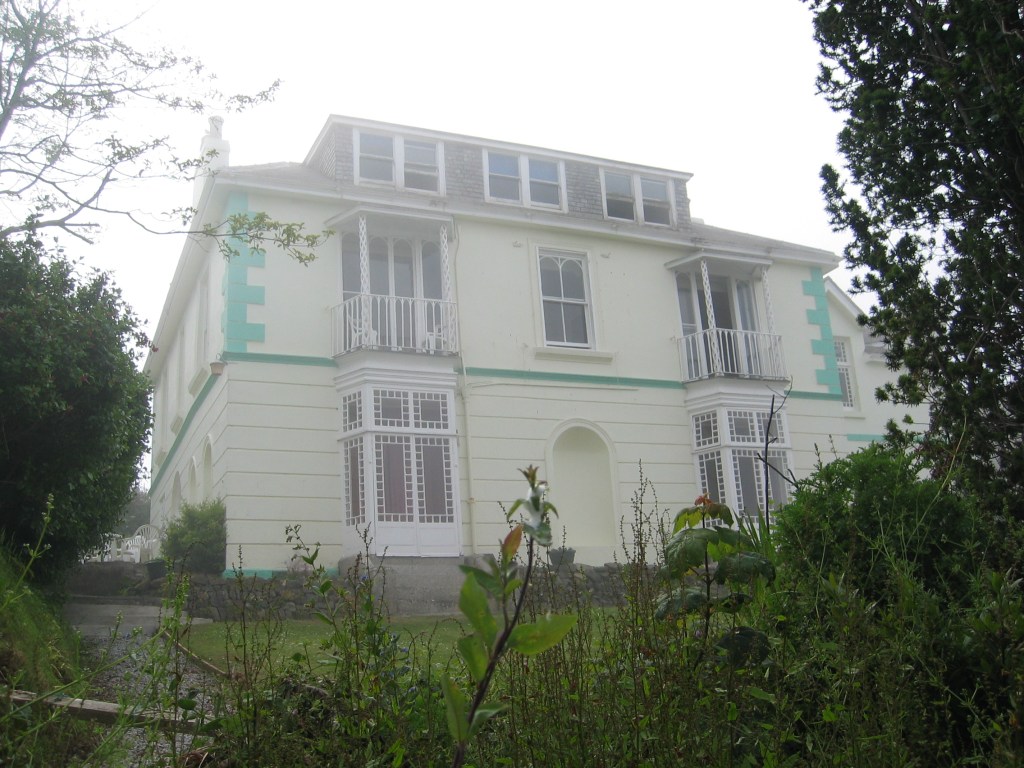
For anyone who reads and loves Virginia Woolf, St. Ives is a magical place. Take a trip back in time by viewing old footage of that Cornish town.
  • From the BBC iPlayer comes “Cornwall: This Fishing Life,” with series 2, episode 4, focusing on St. Ives. It includes old black and white film footage of the place where Woolf and the Stephen family spent their summers until she was 12.
  • Nineteen seconds of color film footage of St. Ives from Claude Friese-Greene’s The Open Road (1926) a fascinating social record of inter-war Britain. The St. Ives snippet below is available on the British Film Industry‘s YouTube Channel.
  • And just for fun, check out the video below of a model railroad version of St. Ives, circa the 1950s, created by a former St. Ives resident. In this eight-minute video, he adds his own memories, along with details about constructing the layout. Stuart Clarke of the Virginia Woolf Society of Great Britain shared this video and notes that we “may” be able to see Talland House at the 4-minute, 32-second mark.