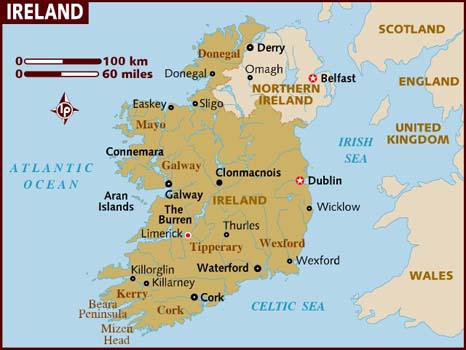
Virginia and Leonard Woolf made their sole trip to Ireland in late April and early May of 1934. They traveled to counties Cork, Kerry and Galway, and they also spent time in Dublin.
In her diaries, Virginia mentioned some of the specific things she loved about the Emerald Isle. They included:
“the perfection of Irish conversation,”
the “character and charm” of “half squalid” Irish life,
and the “rocks and the desolate bays.”
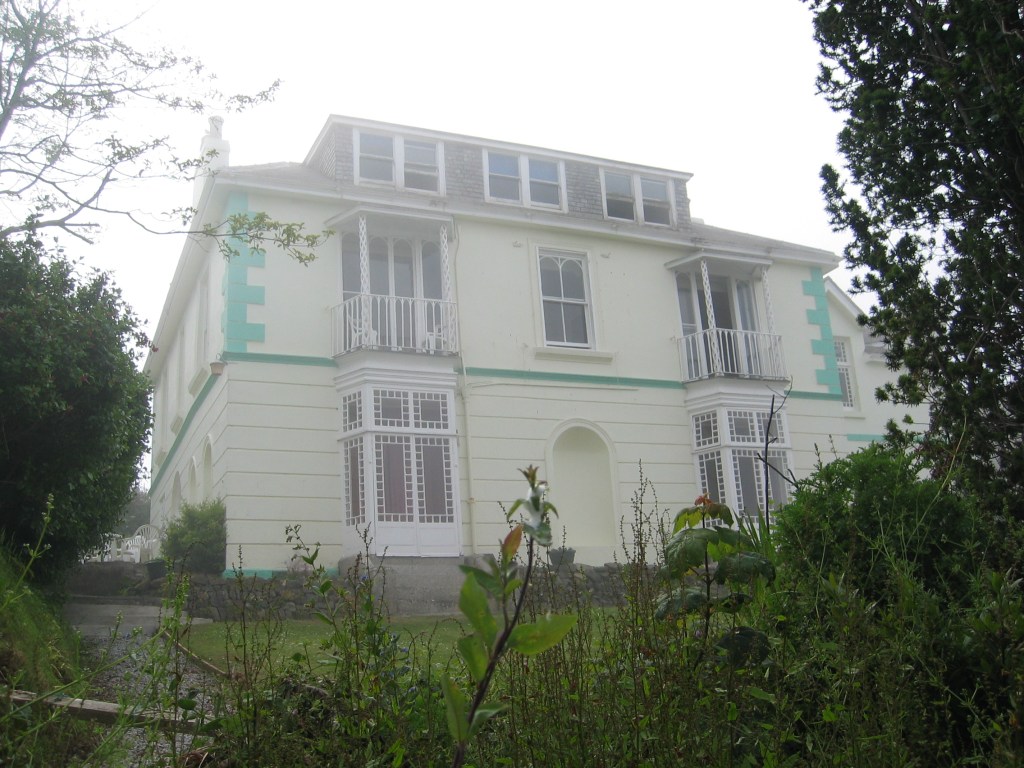
So today, put on your green and read more about the Woolfs’ 1934 trip, complete with photos that attempt to portray — with a 21st century twist — what she saw in Ireland.
See attachment for fuller description. This session will explore the question, “Where and how do we see hope and wonder in Woolf’s earliest memories, her responses to war, and her approaches to making meaning?” Submit a CV and 300-word abstract by March 15, 2021 to Angela Harris (angela.cat.harris@gmail.com).
In our profession, we have an opportunity to create what Virginia Woolf envisioned as a totally new version of higher education in the 21st century, that of “an experimental college, an adventurous college…The aim of the new college, the cheap college, should be not to segregate and specialise, but to combine. It should explore the ways in which mind and body can be made to co-operate; discover what new combinations make good wholes in human life” (Three Guineas 43).
This panel will inspire productive conversation around the idea of Woolf’s 21st century notion of what academia might look like—exploring the myriad ways in which we, as professors, graduate students, undergraduates, bloggers, and common readers alike, might realize her collaborative vision in our teaching and scholarship today and in the increasingly uncertain future of academia. Please send a 250-300 word abstract and your contact information by March 15, 2021 to emhinnov@yahoo.com.
CFP #3: Louisville Conference
The International Virginia Woolf Society is pleased to host its twenty-second consecutive panel at the University of Louisville’s Conference on Literature and Culture Since 1900, scheduled for February 25-27, 2022. We invite proposals for critical papers on any topic concerning Woolf’s work. A specific panel theme may be decided upon depending on the proposals received. Previous IVWS panels have met with great enthusiasm at Louisville, and we look forward to another successful session.
Please submit by email a cover page with name, email address, mailing address, phone number, professional affiliation, and title of paper, and a second anonymous page containing a 250-word paper proposal, with title, to Emily M. Hinnov, ehinnov@ccsnh.edu, by Monday, August 30, 2021.
Panel Selection Committee
Beth Rigel Daugherty
Jeanne Dubino
Vara Neverow
Woolf’s groundbreaking A Room of One’s Own (1929) is up now, with online lectures via Zoom this month by Alison Hennegan on androgyny on March 6, and Trudi Tate on women on March 13 and 14.
These are followed by five different lectures on The Waves, a rare chance to consider all aspects of this fascinating novel.
Five lectures on The Waves
Emma Sutton on music in The Waves on March 23
Ellie Mitchell on Percival in The Waves on April 3
Trudi Tate on friendship in The Waves on April 4
Karina Jakubowicz on gardens in The Waves on April 11
Gillian Beer on “Reading The Waves Across a Lifetime” (repeated by popular request) on April 24
From Flush to Between the Acts
Alison Hennegan will discuss Flush on April 10.
Karina Jakubowicz lecturing for Literature Cambridge
Literature Cambridge will finish out its first Woolf Season with Claire Davison on music in Three Guineas, Anna Snaith on The Years, Claire Nicholson on Between the Acts and costume, and more.
A second Woolf Season is planned for October 2021, and you can study some of Woolf’s brilliant contemporaries in the Women Writers Season: May Sinclair, Sylvia Townsend Warner, Zora Neale Hurston, Jean Rhys, HD, Rosamund Lehmann, Vita Sackville West, Winifred Holtby, and others, starting in June 2021. https://www.literaturecambridge.co.uk/women
With women’s employment taking a huge hit due to the COVID-19 pandemic, the VWSGB is asking us to share a photograph of a room of our own — if we are lucky enough to have one.
Women, work, and the pandemic
The pandemic has affected women’s work lives in drastic ways. The BBC is calling it a “shecession” and cites these facts:
Globally, women’s job losses due to Covid-19 are 1.8 times greater than men’s.
In the U.S., unemployment has intensified the most for those employed in personal care and food service jobs, where women predominate.
One in four women surveyed said they were thinking about reducing or leaving paid work due to the pandemic.
Those disproportionately affected in the U.S. include black women and Latinas.
Some subgroups are squeezed even more, like mothers of young children and mothers without partners or relatives.
In addition, recent projections estimate that employment for women may not recover to pre-pandemic levels until 2024—two full years after a recovery for men, according to Fortune.
The pertinence of A Room of One’s Own
So the British society has turned its attention to Virginia Woolf’s eternally pertinent feminist manifesto, A Room of One’s Own, a text the society writes, “Now more than ever . . . is acutely relevant given that women’s work is being so squeezed and undervalued, and space is at a premium in family homes and elsewhere during life under lockdown, with working and schooling taking place in the home.”
Share your room of your own or your thoughts about the essay
So here’s the charge: Share photos of your own Room of One’s Own, if you are lucky enough to have one, or your reflections on Woolf’s essay A Room of One’s Own and what it means to you. The society will share contributions on its social media pages.
And on March 8, check the VWSGB social media accounts:
Dogs and Virginia Woolf is the subject of a newly published long-form essay by Mireille Duchene, author of Virginia Woolf, An Unpublished Notebook (1907-1909). Published in French, Entre chiens et Woolf, une affaire de femmes (EUD, Essais) (Between Dogs and Woolf: A Women’s Affair) is in the form of a revisited biography.
In this 146-page essay, Duchene investigates the issues of animals in literature and gender and identity.
Woolf, women and dogs
The essay explores the unique relationship between Woolf and her dogs and the place they hold in her daily life and imagination.
Duchene discusses the dog Woolf had in childhood, as well as the dogs of her powerful female friends, Violet Dickinson, Vita Sackville-West, and Ethel Smyth, mistresses of a chow-chow, a greyhound and sheepdogs. hag, Woolf’s faithful terrier companion, of whom Woolf wrote a funny and touching obituary for The Guardian, which is reprinted in French in Entre chiens et Woolf, une affaire de femmes.